<?xml version="1.0" encoding="utf-8"?><feed xmlns="http://www.w3.org/2005/Atom" ><generator uri="https://jekyllrb.com/" version="3.10.0">Jekyll</generator><link href="https://mariaciocan.github.io/feed.xml" rel="self" type="application/atom+xml" /><link href="https://mariaciocan.github.io/" rel="alternate" type="text/html" /><updated>2026-10-19T08:54:34+00:00</updated><id>https://mariaciocan.github.io/feed.xml</id><title type="html">Chess and Stuff with Maria</title><subtitle>I love chess and books, among other things. So I&apos;ll share reviews and bits I find interesting.</subtitle><author><name>Maria Ciocan</name></author><entry><title type="html">A weekend of chess: 4NCL starts again</title><link href="https://mariaciocan.github.io/2026/10/12/a-weekend-of-chess-at-4ncl.html" rel="alternate" type="text/html" title="A weekend of chess: 4NCL starts again" /><published>2026-10-12T00:00:00+00:00</published><updated>2026-10-12T00:00:00+00:00</updated><id>https://mariaciocan.github.io/2026/10/12/a-weekend-of-chess-at-4ncl</id><content type="html" xml:base="https://mariaciocan.github.io/2026/10/12/a-weekend-of-chess-at-4ncl.html"><![CDATA[<p>It’s autumn. For some, this means school is starting. For others, the summer of internships or vacationing is over, and it’s time to join a grad scheme or update their CV. For me, autumn means over-the-board chess is back! (<i>Isn’t it funny, by the way, how much the Internet has shaped chess culture? Back in the day, over-the-board chess was just chess! Amazing!</i>)</p>

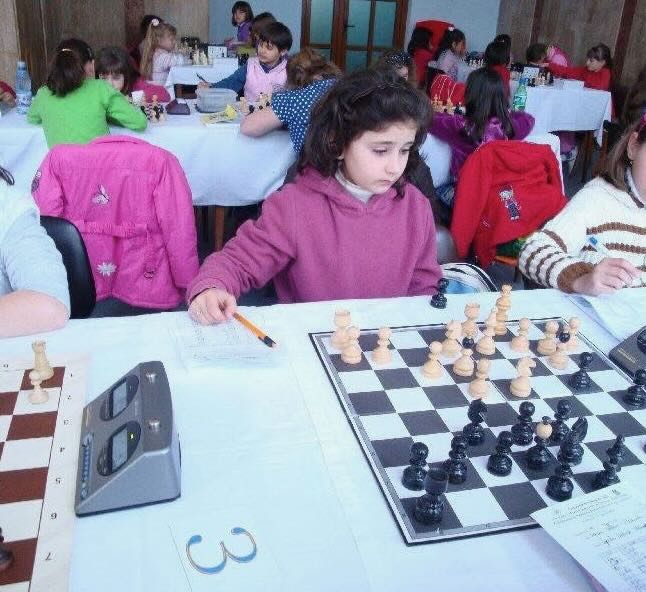
<p>When I was a junior, the busiest chess moment of the year was the summer, since going to tournaments in the rest of the year meant missing school. So the summer break was the perfect opportunity to go away for a week and spend 3 to 6 hours in some hopefully air-conditioned-but-most-likely-not room playing chess. I started playing chess at 7 years old, and there was never a year I didn’t play at least one tournament over the summer until I turned 18.</p>

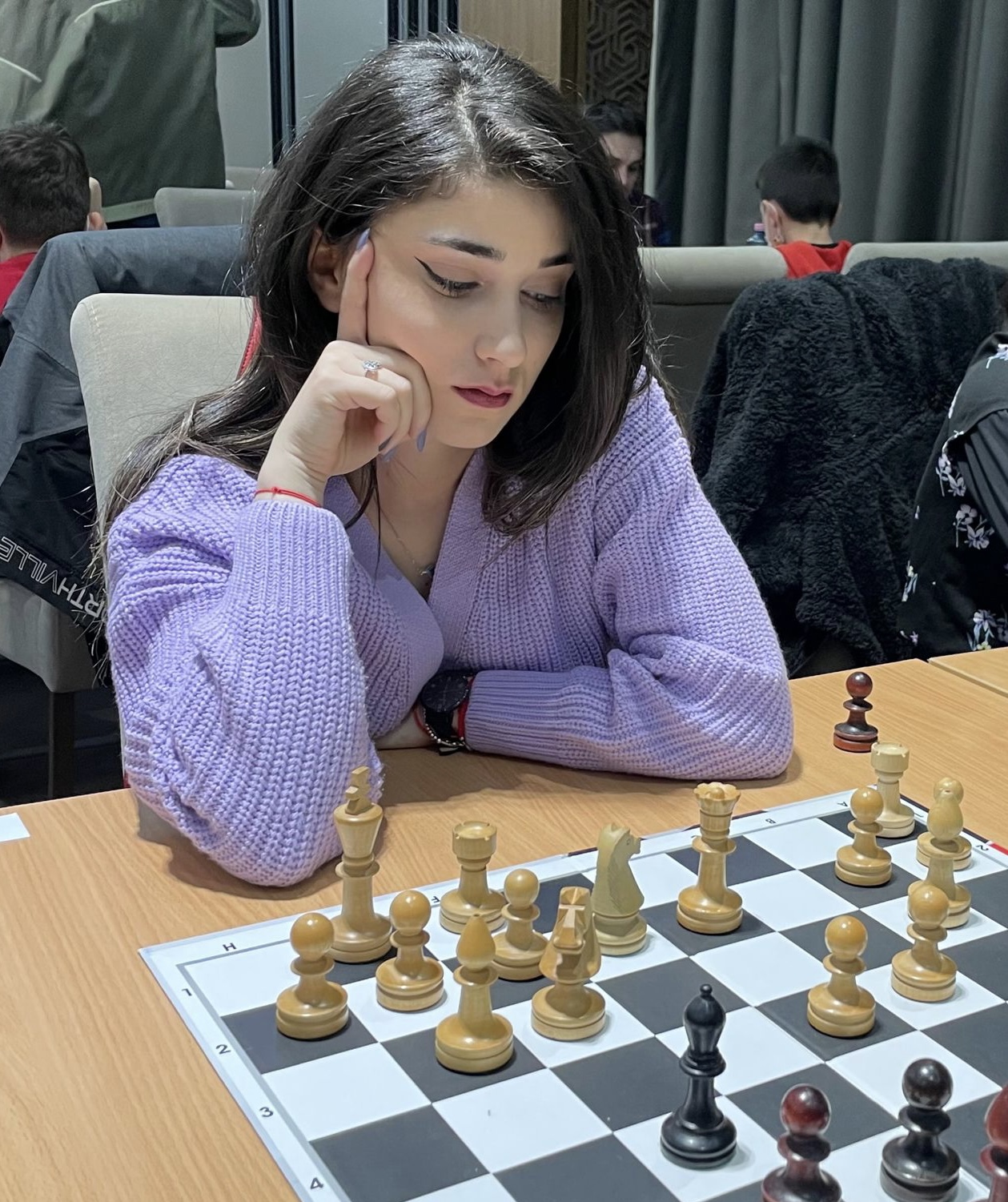
<p><img src="/assets/docs/new/2026-10-12-a-weekend-of-chess-at-4ncl/IMG_8957.jpeg" alt="Young players taking part in a chess tournament" /></p>

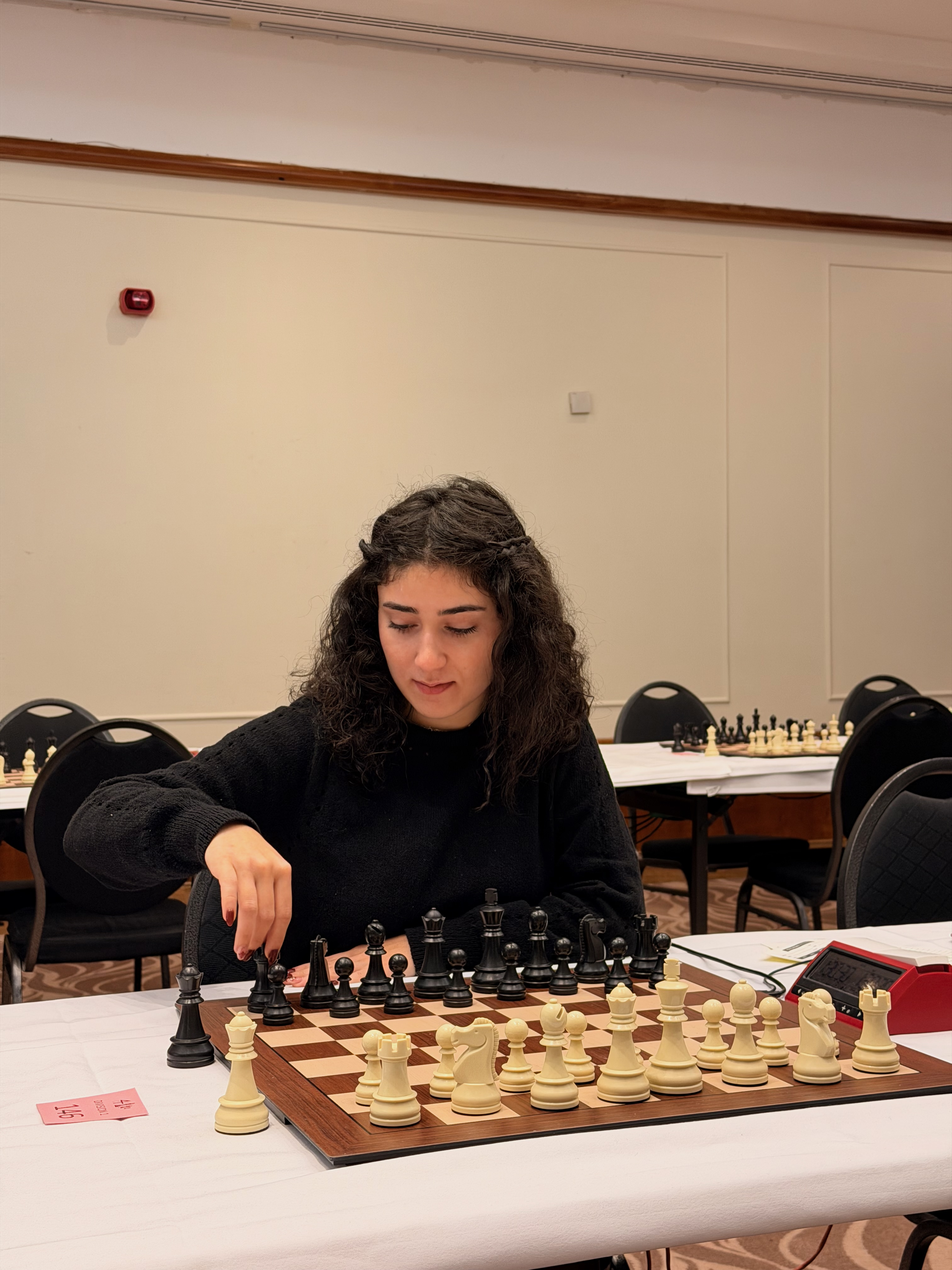
<p>Nowadays, I have the opposite schedule. The <a href="https://londonchess.com/">London Chess League</a> and the <a href="https://www.4ncl.co.uk/">UK’s Four Nations Chess League</a> span the months of October through May to form what in my life represents the ✨chess season✨. Another indicator that the chess season is restarting in my life is that I’ve finally posted a new game analysis on YouTube. And bonus, it’s in the King’s Indian 😍. It blends some instructive strategical ideas with some unhinged ones that come up in a time scramble.</p>

<figure class="video-preview">
  <a class="video-preview-link" href="https://www.youtube.com/watch?v=GzkMMkxST3o">
    <img src="https://i.ytimg.com/vi/GzkMMkxST3o/hqdefault.jpg" alt="Thumbnail of my King's Indian game analysis" width="480" height="360" loading="lazy" />
    <span class="video-preview-play" aria-hidden="true"></span>
  </a>
  <figcaption><a href="https://www.youtube.com/watch?v=GzkMMkxST3o"></a></figcaption>
</figure>

<p>The Four Nations Chess League is a team competition with five divisions. There is a promotion and relegation system between divisions, with Division One being the most competitive. You can think of its format as similar to the Olympiad, but with clubs instead of countries. Teams position their eight players according to rating-gap rules, and the line-ups become public two hours before the match starts. The players alternate colours: board one of one team plays White, board two plays Black, and so on. Each player’s result counts towards the team’s total, and the team that scores the most points across all games wins the match.</p>

<p>One quirky thing about the 4NCL is the way it’s organized. Most classical chess tournaments take up five to nine days all at once. Instead, the 4NCL spreads eleven rounds across the season, with two rounds on a weekend every few weeks. One game on Saturday, one on Sunday, and see you next time!</p>

<blockquote class="instagram-media" data-instgrm-permalink="https://www.instagram.com/reel/DQotAPhiL14/" data-instgrm-captioned="" data-instgrm-version="14" style="max-width:660px; width:100%; margin:1.5rem auto;">
  <a href="https://www.instagram.com/reel/DQotAPhiL14/">Watch this reel on Instagram</a>
</blockquote>
<script async="" src="https://www.instagram.com/embed.js"></script>

<p>At first, I was skeptical about this format. In terms of effort, you end up traveling back and forth much more than in a traditional system. I also worried this would make it hard to get into a rhythm. But over the years (this is my fourth year playing the 4NCL!), I came to appreciate it.</p>

<p>Firstly, it is much more inclusive. Not everyone has the time and budget to book a week away from work for chess and pay for a hotel for a whole week. People can come for the weekend and choose not to play the whole thing. Since teams usually have more players in the squad than the eight they need for a day’s match, they can rotate players so everyone can choose how many weekends to attend.</p>

<p>Secondly, what I saw as a downside — not having time to get into a rhythm — can also be a plus: if you have a rocky start or a frustrating loss, you can go home, relax, train some more, and avoid ruining the rest of your games because of bad form.</p>

<p>Thirdly, this way of organizing shows awareness of the realities of being a strong non-professional chess player. Even as a titled player, you cannot reliably make a living from playing alone. Given the limited funding in competitive chess in general, it would be unfair to force people to drop their other commitments, and equally unfair to force them to miss out on one of the UK’s most competitive tournaments.</p>

<p>Another quirky thing about the 4NCL, and about team competitions in general, is that the way you go from one opponent to the next feels completely different from an open tournament. In an open, if you win, you climb towards the top and thus face stronger and stronger opponents. If you start losing, you usually begin facing weaker and weaker opponents as well. But at the 4NCL, all teams face each other eventually. That basically means you might play terribly on a Saturday and then find out you’re facing a GM on Sunday. (This has happened to me: I went home with nil out of two, yikes.) Another thing that happened to me last year in Division One: despite struggling through the games and scoring 2.5/11 (which was decent, all things considered), all my opponents had a rating over 2000, and only two of them were under 2100.</p>

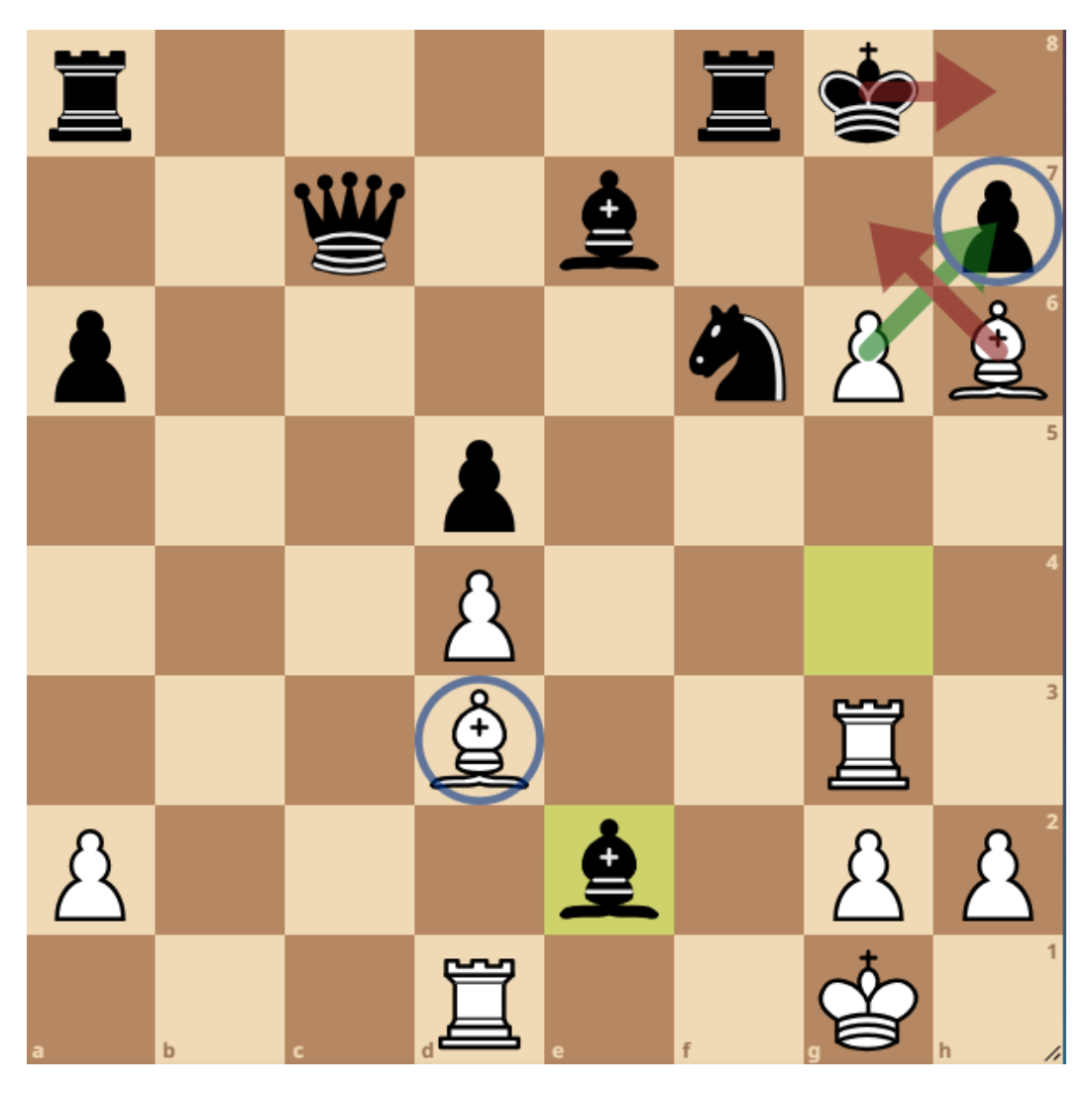
<p><img src="/assets/docs/new/2026-10-12-a-weekend-of-chess-at-4ncl/IMG_8763.jpg" alt="Chess position with arrows showing possible attacking moves" /></p>

<p>Last weekend, I played in Division Two. And although it’s not as intense as Division One, I actually welcome the opportunity to win more. Both my opponents last weekend were around 2000 FIDE, and since my current rating is 2010, that makes it very achievable for me to win and grow my rating. But this also adds pressure. (Pressure from whom? From myself, of course. If you watch me on Twitch, you know I have no chill when it comes to chess.) Last year, when most of my games were against titled players, losing sucked less because it was the expected result. And even though I had a couple of devastating throwaways, I couldn’t be too hard on myself. This year, winning is much more the expected result if I want to approach the 2100 milestone.</p>

<h3 id="game-one-️">Game one ♟️</h3>

<p>I started this game in a really bad mood. I had planned to make it to the venue two hours before the game was supposed to start, but multiple trains from London towards the North-West were cancelled at the last moment. So I made it 45 minutes late to the game, with no time to catch my breath or check into my hotel room after a stressful re-scheduling of the itinerary. The time control at 4NCL is 90 minutes plus a 30-second increment, with an extra 30 minutes after move 40. So starting the game with 50 minutes left didn’t mean I couldn’t still win, but it can prove to be a huge disadvantage if the game is complex from early on. During the game, I knew I needed to try to close the gap on the clock between me and my opponent, but I just couldn’t. Not having played classical in five months, feeling tired and annoyed, I just couldn’t feel confident enough to talk myself into moving faster.</p>

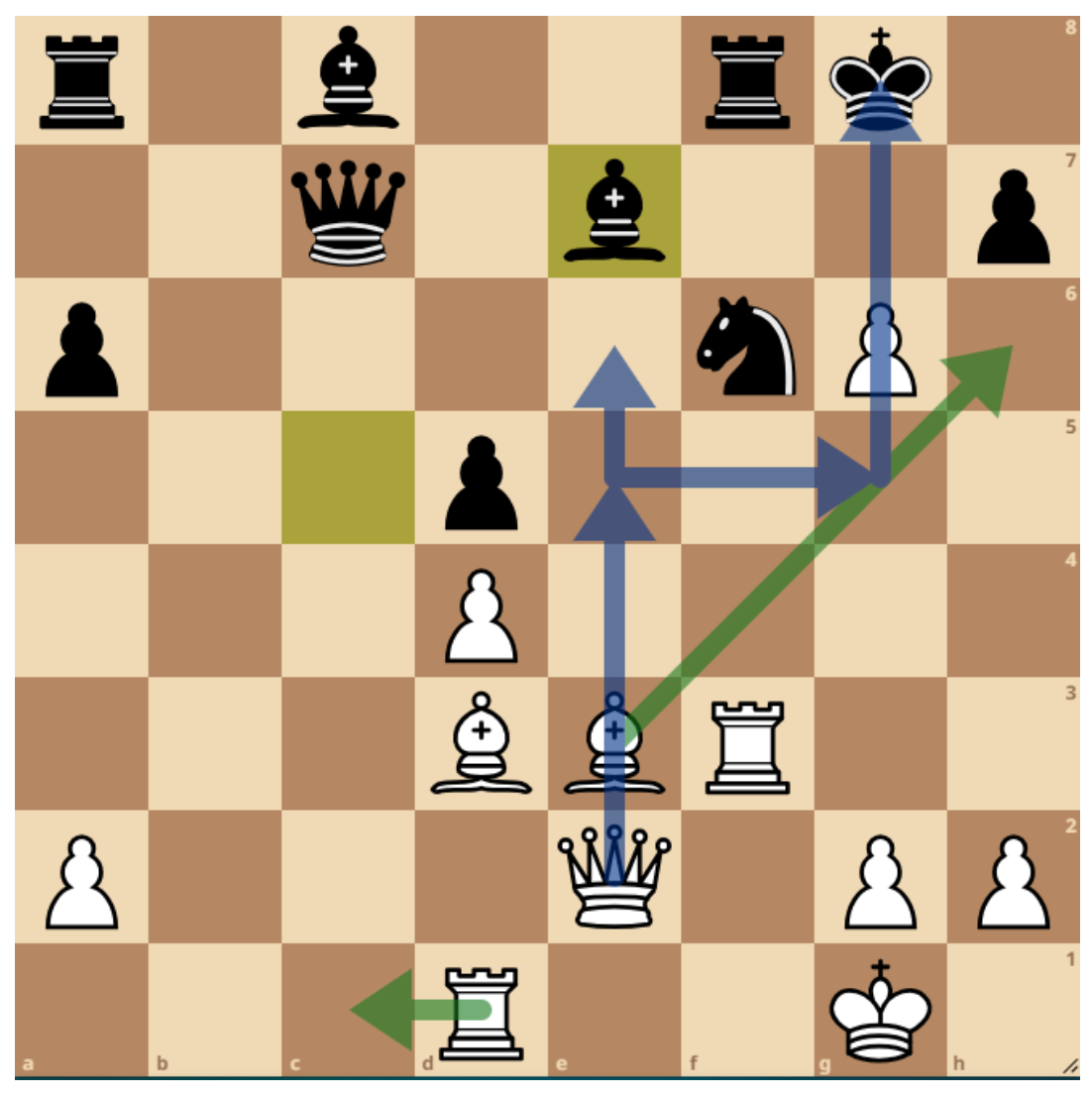
<p>The first critical moment of the game came here. Use the arrows or the “autoplay” button below to see the sequence I’m speaking about. After trades on d5, I thought the position was around equal, and I was looking for some quick, solid moves I could play fast. But my opponent surprised me by recapturing with the bishop, which immediately felt off. After a quick Na4 and his response Nd7, I felt I had taken over the initiative.</p>

<link rel="stylesheet" href="/assets/vendor/cm-chessboard/8.15.3/assets/chessboard.css" />

<link rel="stylesheet" href="/assets/vendor/cm-chessboard/8.15.3/assets/extensions/arrows/arrows.css" />

<link rel="stylesheet" href="/assets/vendor/cm-chessboard/8.15.3/assets/extensions/markers/markers.css" />

<link rel="stylesheet" href="/css/chess-replay.css" />

<script type="module" src="/js/chess-replay/chess-replay.js"></script>

<figure class="chess-replay" data-chess-replay="" data-start="k1rr4/1pq1bpp1/p1bppn1p/8/4P1P1/1PNB1P1P/PBP2Q2/1K1RR3 b - - 0 19" data-moves="19... d5 20. exd5 Bxd5 21. Na4 Nd7" data-orientation="white" data-autoplay="off" data-speed="1200" data-loop="false" data-loop-delay="2000" data-theme="default" data-arrows="4: a4b6 green; 5: a4b6 green, d7b6 green" data-arrow-width="1" data-pieces-file="pieces/standard.svg" data-label="">
  <div class="chess-replay__fallback">
    <p><strong>Chess sequence:</strong> 19... d5 20. exd5 Bxd5 21. Na4 Nd7</p>
  </div>
  <p class="chess-replay__credit">
    Chess pieces by <a href="https://commons.wikimedia.org/wiki/Category:SVG_chess_pieces/Standard" rel="noopener">Cburnett</a>,
    <a href="https://creativecommons.org/licenses/by-sa/3.0/" rel="license noopener">CC BY-SA 3.0</a>
  </p>
</figure>

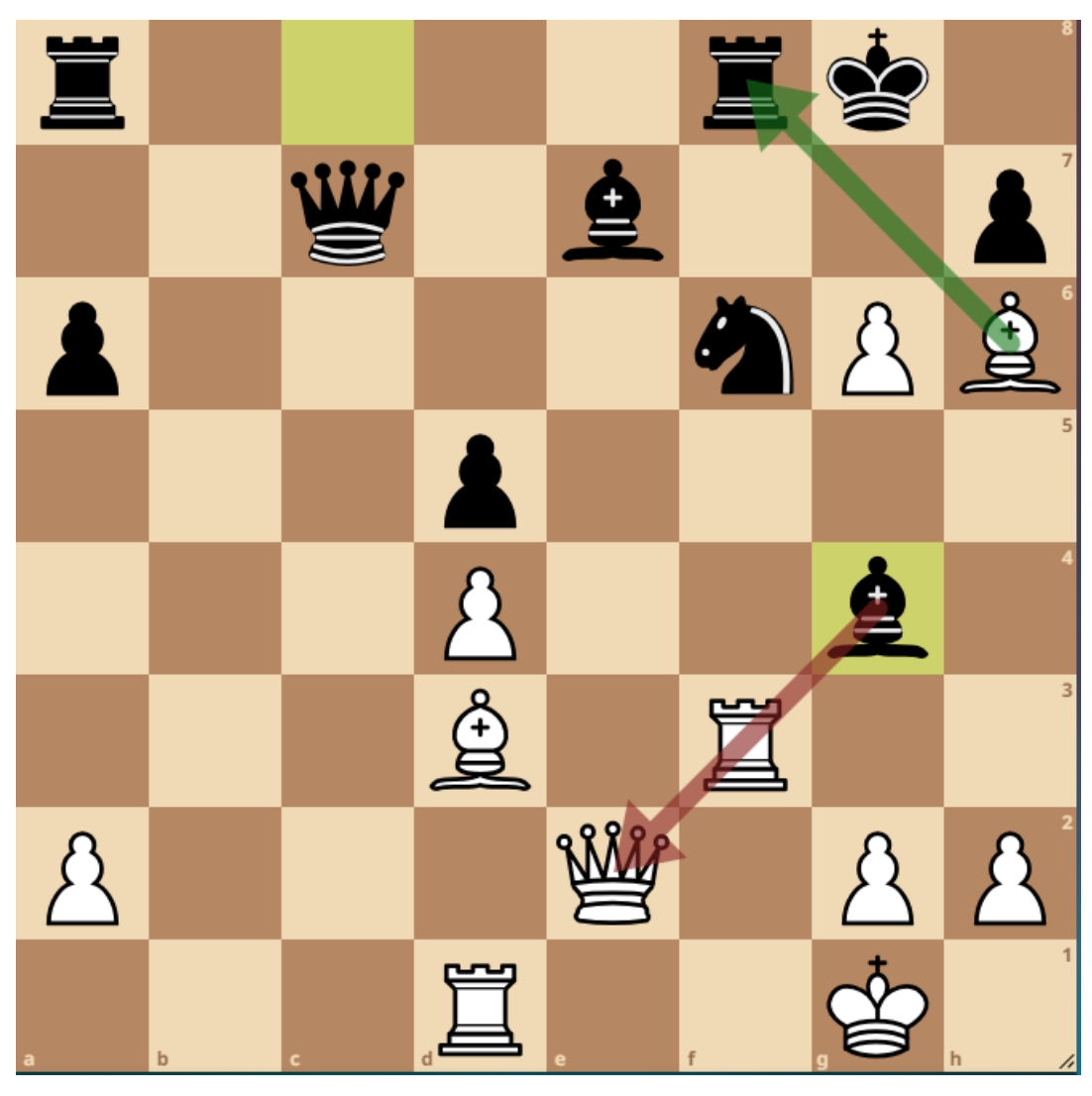
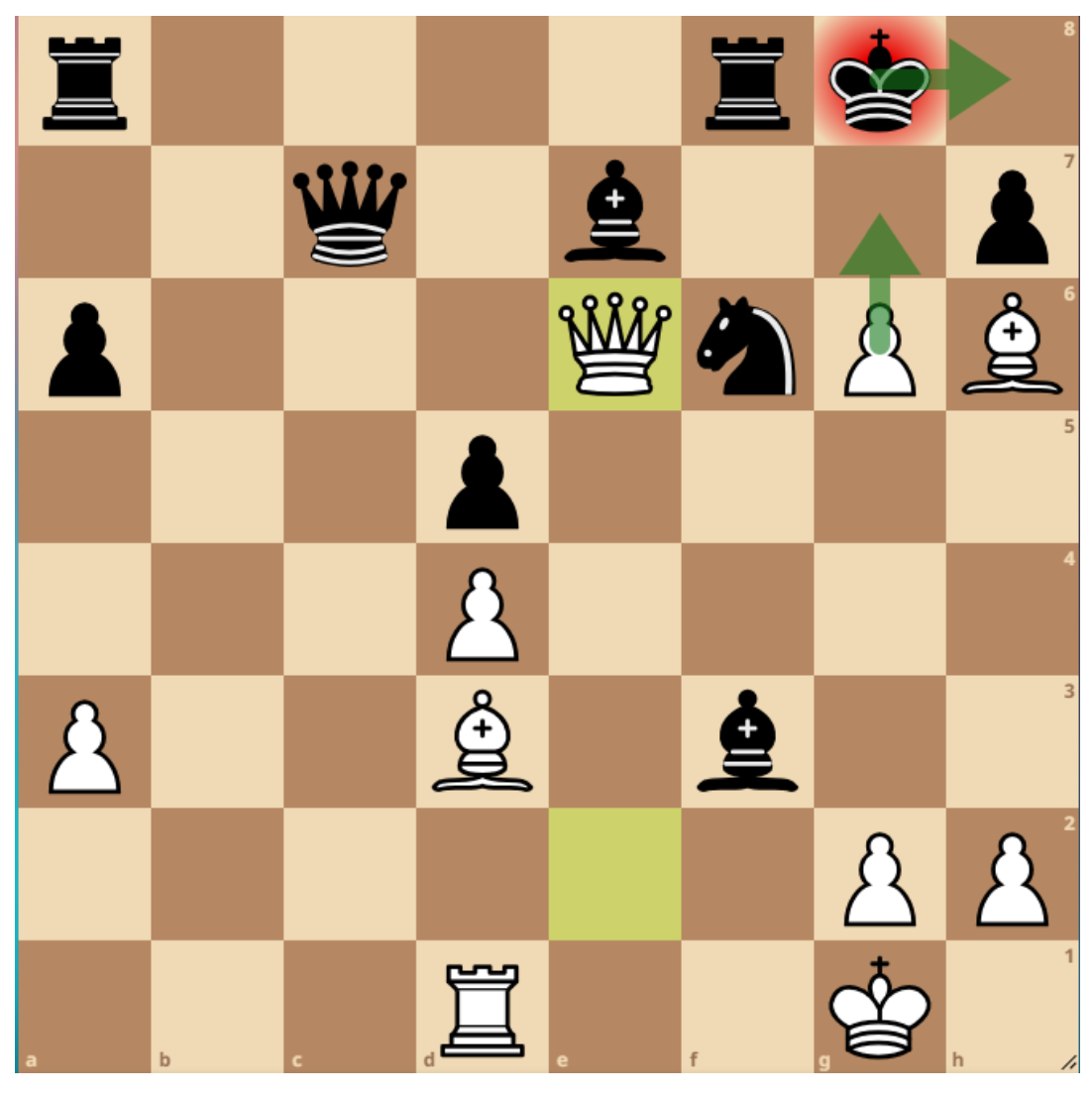
<p>But I had 6 minutes left and 16 moves to play until the extra time. I burned through the remainder of my time calculating B takes a6, and by the time I put it on the board, I had 2 minutes left. When I finally played it, to be honest, I did it out of the sunk-cost fallacy as well. I didn’t have enough time to convince myself it was working (and it wasn’t), but I’d already spent so long calculating it that I felt I might as well try it. My opponent was trying to play fast, even though he had time on the clock. A common strategy is to stop the player in time trouble from thinking on your time, force them to make a mistake, and then spend time finding the punishment. So he didn’t find the right way to punish my overly enthusiastic bishop sacrifice and… I’m winning.</p>

<figure class="chess-replay" data-chess-replay="" data-start="k1rr4/1pqnbpp1/p3p2p/3b4/N5P1/1P1B1P1P/PBP2Q2/1K1RR3 w - - 2 22" data-moves="22. Bxa6 bxa6 23. Rxd5 exd5 24. Rxe7" data-orientation="white" data-autoplay="off" data-speed="1200" data-loop="false" data-loop-delay="2000" data-theme="default" data-arrows="3: e7h4 green" data-arrow-width="1" data-pieces-file="pieces/standard.svg" data-label="">
  <div class="chess-replay__fallback">
    <p><strong>Chess sequence:</strong> 22. Bxa6 bxa6 23. Rxd5 exd5 24. Rxe7</p>
  </div>
  <p class="chess-replay__credit">
    Chess pieces by <a href="https://commons.wikimedia.org/wiki/Category:SVG_chess_pieces/Standard" rel="noopener">Cburnett</a>,
    <a href="https://creativecommons.org/licenses/by-sa/3.0/" rel="license noopener">CC BY-SA 3.0</a>
  </p>
</figure>

<p>I feel I’m winning, but I know it’s slippery in time trouble. And even though I’m better, I’m much more stressed than before. Now I have something to ruin: a position to beat myself up for destroying. Which, spoiler alert, is exactly what happened.</p>

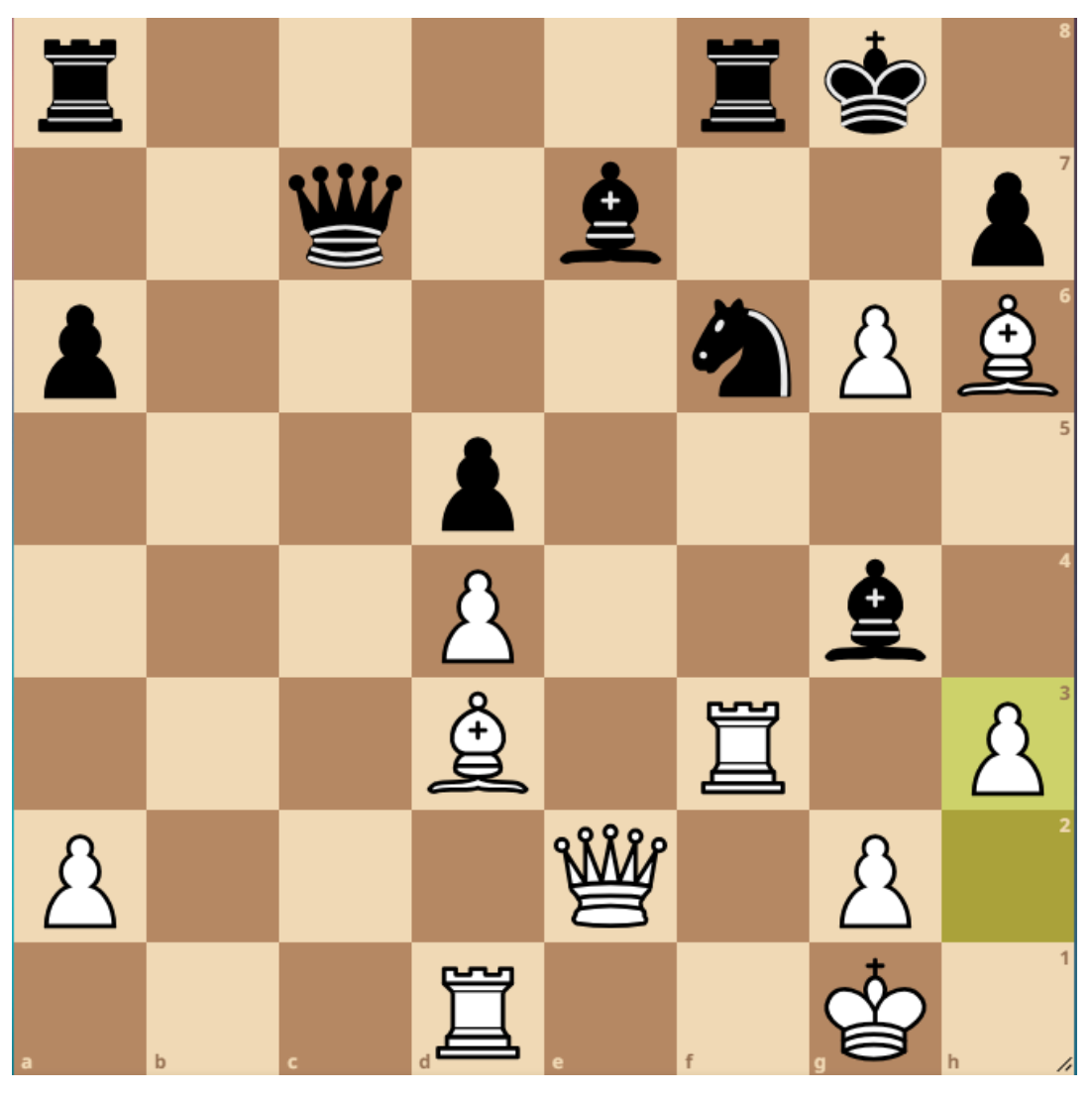
<p>I grab a bunch of pawns, but I miss an opportunity to simplify, thinking I still have time later on. I’m trying to keep up the pressure, but the truth is, instead of looking for wins, my mind is bracing for jump-scare comebacks from my opponent to spawn on the board at any moment.</p>

<p>I make my first blunder. It’s a very silly blunder—for some reason, I just forgot that he can take twice on c3.</p>

<figure class="chess-replay" data-chess-replay="" data-start="kr6/2rn4/p3q2p/3p1R2/N5P1/1P3P1P/PBP2Q2/1K6 b - - 4 28" data-moves="28... Rbc8 29. Bc3 Rxc3 30. Nxc3 Rxc3 31. Qd4 Rc5" data-orientation="white" data-autoplay="off" data-speed="1200" data-loop="false" data-loop-delay="2000" data-theme="default" data-arrows="" data-arrow-width="1" data-pieces-file="pieces/standard.svg" data-label="">
  <div class="chess-replay__fallback">
    <p><strong>Chess sequence:</strong> 28... Rbc8 29. Bc3 Rxc3 30. Nxc3 Rxc3 31. Qd4 Rc5</p>
  </div>
  <p class="chess-replay__credit">
    Chess pieces by <a href="https://commons.wikimedia.org/wiki/Category:SVG_chess_pieces/Standard" rel="noopener">Cburnett</a>,
    <a href="https://creativecommons.org/licenses/by-sa/3.0/" rel="license noopener">CC BY-SA 3.0</a>
  </p>
</figure>

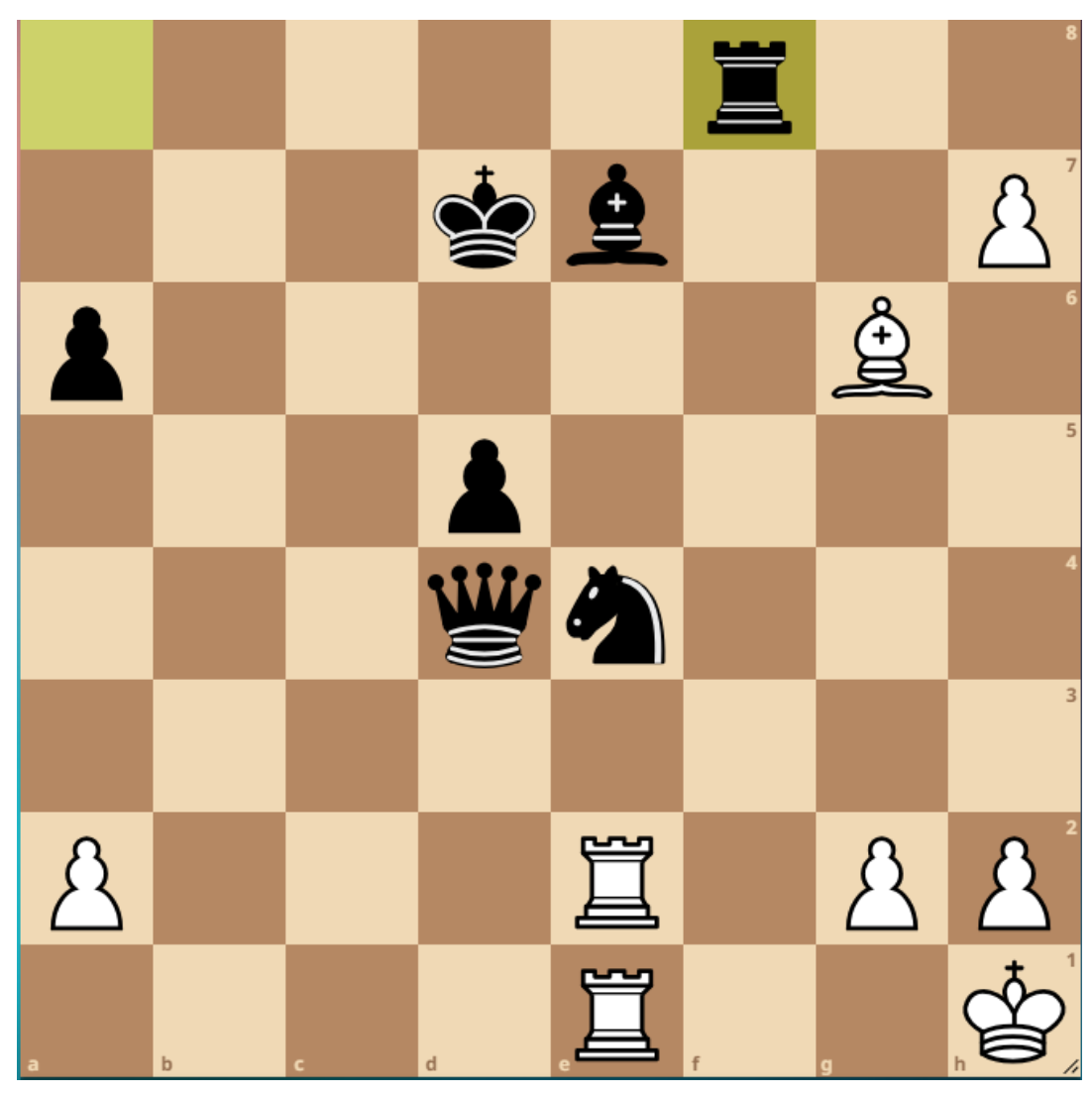
<p>I was trying to keep a straight face while he was considering taking the two pieces, half-praying that he would be scared the bishop move was actually a genius sacrifice. He went for it, of course, but the position was still better for me! I knew I still had some chances to at least draw, so I tried to push the screams of “YOU F*CKED IT!!!” out of my mind. But I felt destabilized. And when Qb4 came, I started panicking. The seconds were ticking down, and I had neither the time nor the clarity to see if the two knight checks he was threatening were actually scary or just looked scary. Nine, eight, seven… I grabbed my king, and soon it was over.</p>

<figure class="chess-replay" data-chess-replay="" data-start="3R4/1kr5/pn5p/3p1P2/6P1/1P1Q3P/PKP5/4q3 b - - 4 37" data-moves="37... Qb4 38. Kc1 Re7 39. Qg3 Re1+ 40. Kb2 Nc4#" data-orientation="white" data-autoplay="off" data-speed="1200" data-loop="false" data-loop-delay="2000" data-theme="default" data-arrows="" data-arrow-width="1" data-pieces-file="pieces/standard.svg" data-label="">
  <div class="chess-replay__fallback">
    <p><strong>Chess sequence:</strong> 37... Qb4 38. Kc1 Re7 39. Qg3 Re1+ 40. Kb2 Nc4#</p>
  </div>
  <p class="chess-replay__credit">
    Chess pieces by <a href="https://commons.wikimedia.org/wiki/Category:SVG_chess_pieces/Standard" rel="noopener">Cburnett</a>,
    <a href="https://creativecommons.org/licenses/by-sa/3.0/" rel="license noopener">CC BY-SA 3.0</a>
  </p>
</figure>

<p>I went to my room in a rage. But the rage didn’t last long.</p>

<p>I’ve lost enough winning positions to know that behind any fury, there’s heartbreak. Ultimately, I felt like my opponent didn’t defeat me—I defeated myself. But that wouldn’t be fair to my opponent, and regardless of how competitive and fierce I feel sometimes, he saw his chance and took it.</p>

<p>Luckily, I ended up feeling mostly okay by the end of the evening. I decided that the fact that I got a winning position was a good sign, and if that happened again in the next game, I wouldn’t miss. I also decided to completely blame it on the trains, of course. But don’t you worry, I did wait until the next day to file my complaint with the train operator.</p>

<h3 id="game-two-️">Game two ♟️</h3>

<p>The pairings are out 90 minutes before each game, which gives players a little more than an hour to prepare their openings. (Looking up your opponent’s name and games on the internet and then revisiting your repertoire is very, very common in chess tournaments. It sometimes makes for a funny vibe in hotel lobbies—everyone is on their phones or laptops, moving chess pieces back and forth.) I saw that my opponent likes playing the Classical line of the French Defense and then going for the aggressive setup with long castling.</p>

<figure class="chess-replay" data-chess-replay="" data-start="r1bqkb1r/pp1n1ppp/2n1p3/2ppP3/3P1P2/2N2N2/PPP3PP/R1BQKB1R w KQkq - 2 7" data-moves="7. Be3 cxd4 8. Nxd4 Bc5 9. Qd2 O-O 10. O-O-O a6" data-orientation="white" data-autoplay="off" data-speed="1200" data-loop="false" data-loop-delay="2000" data-theme="default" data-arrows="" data-arrow-width="1" data-pieces-file="pieces/standard.svg" data-label="">
  <div class="chess-replay__fallback">
    <p><strong>Chess sequence:</strong> 7. Be3 cxd4 8. Nxd4 Bc5 9. Qd2 O-O 10. O-O-O a6</p>
  </div>
  <p class="chess-replay__credit">
    Chess pieces by <a href="https://commons.wikimedia.org/wiki/Category:SVG_chess_pieces/Standard" rel="noopener">Cburnett</a>,
    <a href="https://creativecommons.org/licenses/by-sa/3.0/" rel="license noopener">CC BY-SA 3.0</a>
  </p>
</figure>

<p>I was both thrilled and apprehensive upon learning this. Thrilled because in a position with opposite-side castling, anything can happen, giving me great winning (and losing) chances. I wanted to make sure I went for the win—after the previous loss, I was meant to lose 11.6 rating points, which would put my new rating at the infuriating value of 1999. And a draw wouldn’t quite cut it, giving me just 1.2 points, meaning I’d be at FIDE’s mercy to stay at 2000 or drop back to the ugly 19-prefix rating. But I was also apprehensive because I hadn’t had great results against this system in the past. I did my best to prepare, and, luckily enough, my opponent did play into one of the lines I had glanced at in the morning.</p>

<figure class="chess-replay" data-chess-replay="" data-start="r1bq1rk1/1p1n1ppp/p1n1p3/2bpP3/3N1P2/2N1B3/PPPQ2PP/2KR1B1R w - - 0 11" data-moves="11. Nb3 Bb4 12. Bd3 b5 13. g4 Nb6 14. Qf2 Nc4" data-orientation="white" data-autoplay="off" data-speed="1200" data-loop="false" data-loop-delay="2000" data-theme="default" data-arrows="" data-arrow-width="1" data-pieces-file="pieces/standard.svg" data-label="">
  <div class="chess-replay__fallback">
    <p><strong>Chess sequence:</strong> 11. Nb3 Bb4 12. Bd3 b5 13. g4 Nb6 14. Qf2 Nc4</p>
  </div>
  <p class="chess-replay__credit">
    Chess pieces by <a href="https://commons.wikimedia.org/wiki/Category:SVG_chess_pieces/Standard" rel="noopener">Cburnett</a>,
    <a href="https://creativecommons.org/licenses/by-sa/3.0/" rel="license noopener">CC BY-SA 3.0</a>
  </p>
</figure>

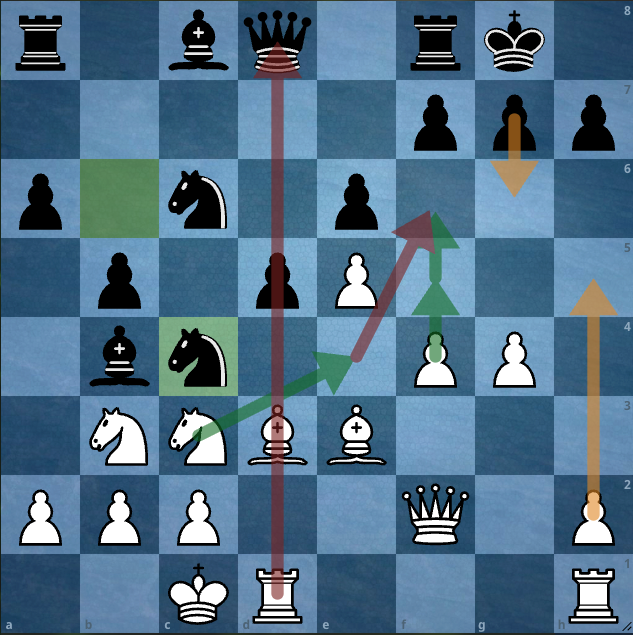
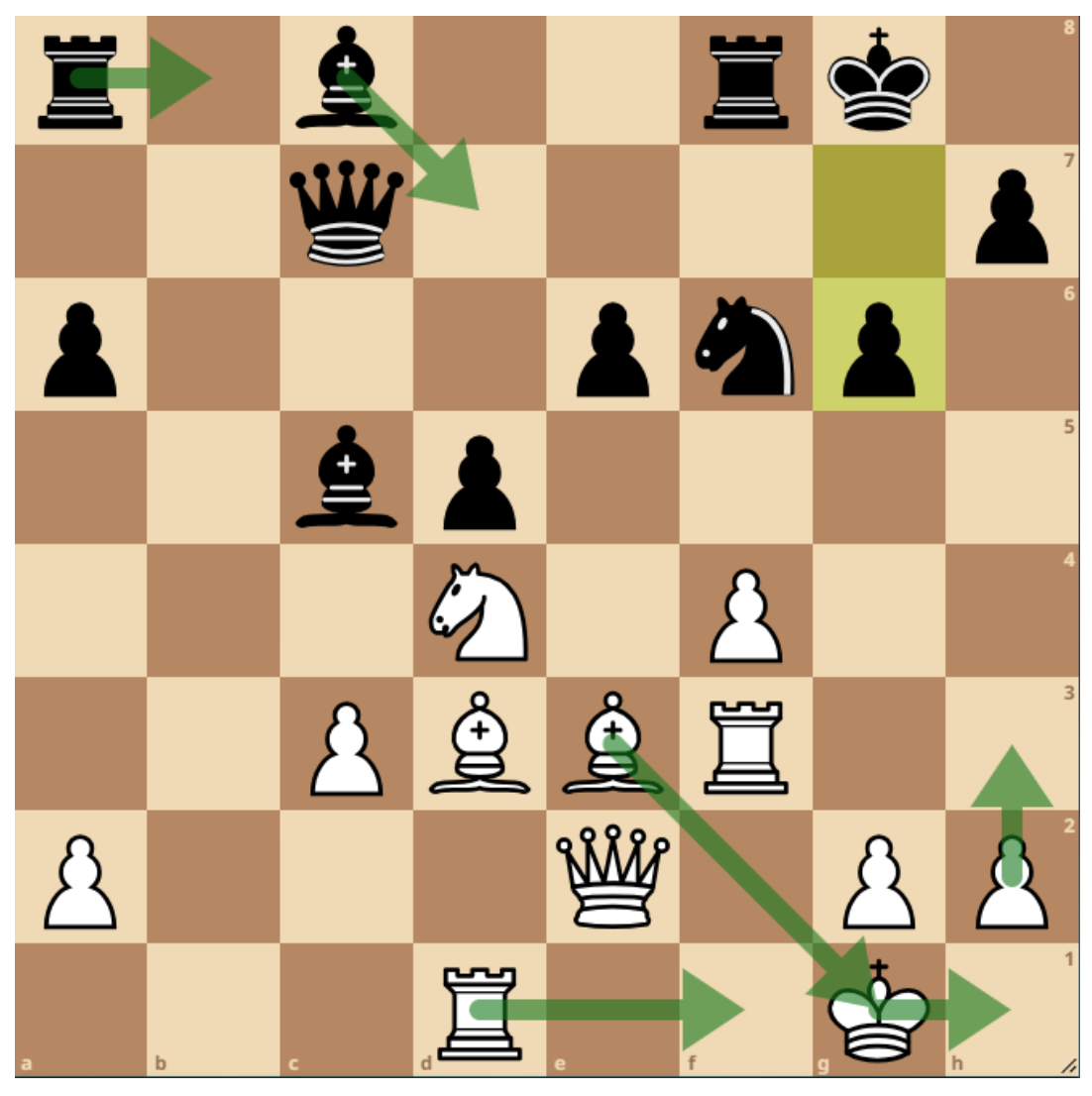
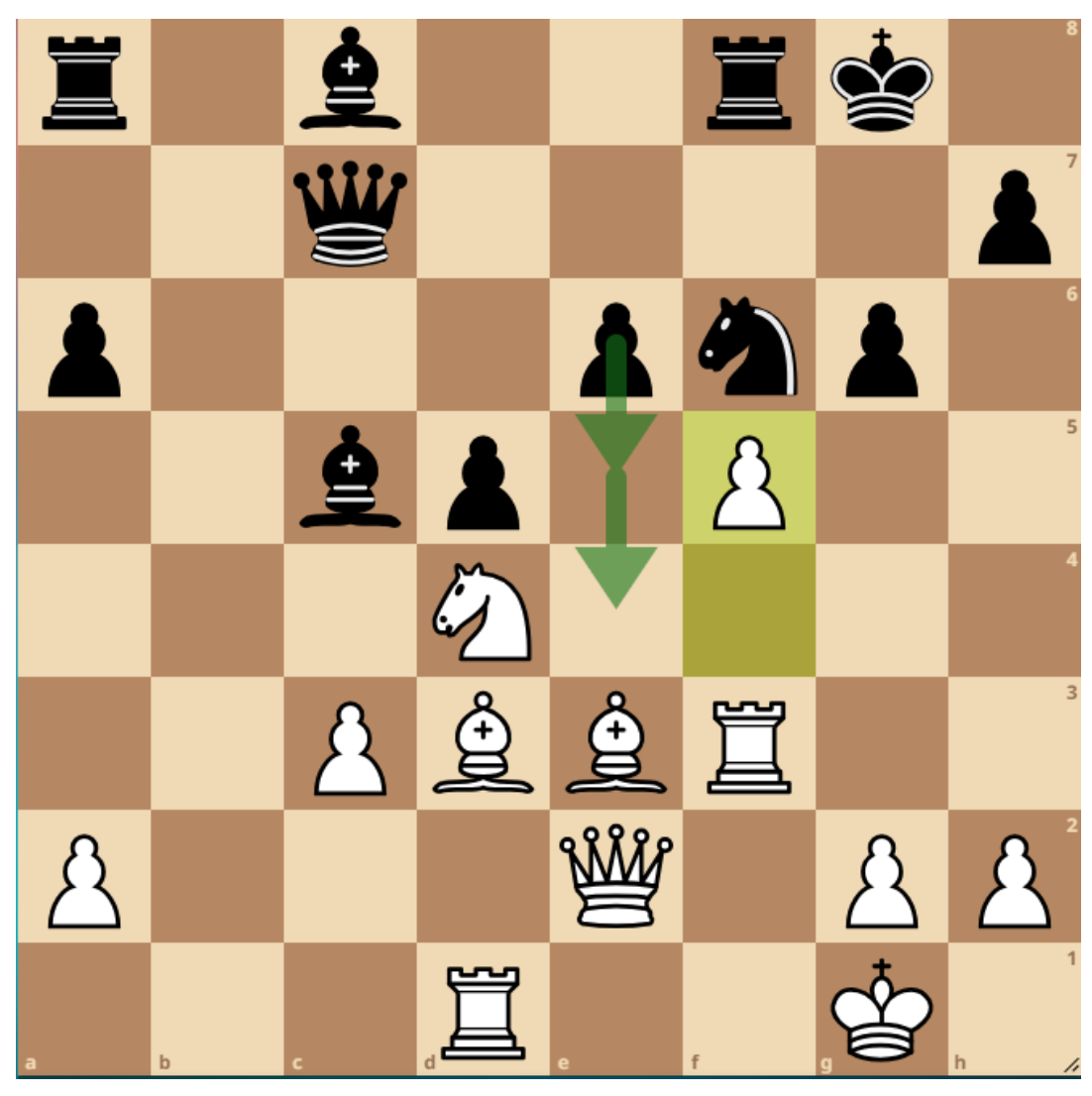
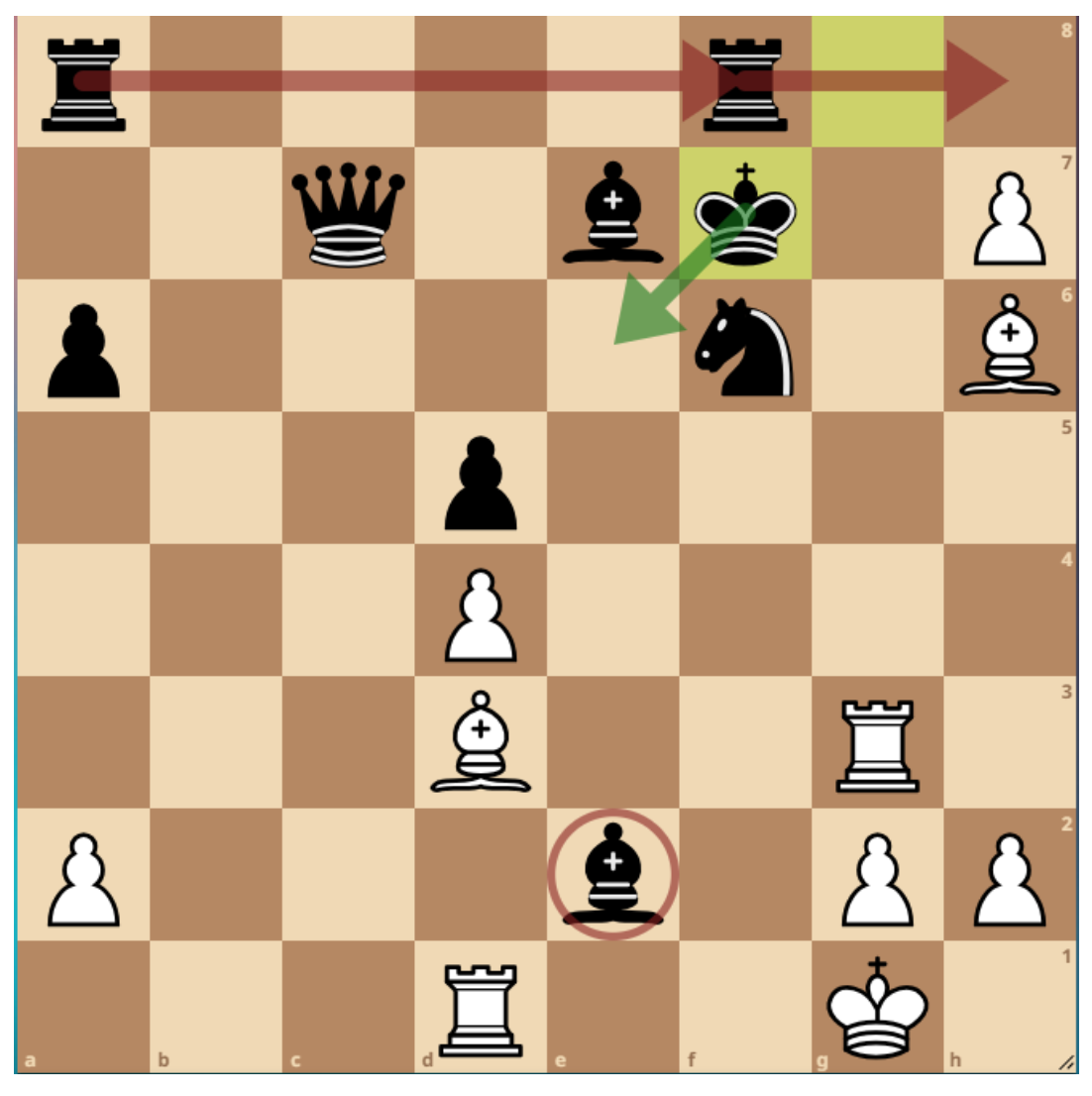
<p>Placing the knight on c4 was the end of my preparation, but I felt good knowing that I had looked at some typical ideas earlier in the day. The tricky thing about these positions is that they’re very scary and can become cut-throat very suddenly. White’s plan usually involves trying to push f5, and, if allowed, f6. If Black tries to stop this with g6, it weakens the dark squares, and White can choose between doubling up on the h-file, planting a knight on f6, or pushing h4-h5. The way my opponent played it, with g5 first, is also very valid.</p>

<p><img src="/assets/docs/new/2026-10-12-a-weekend-of-chess-at-4ncl/image.png" alt="Chess position with arrows illustrating White's kingside attacking plans" /></p>

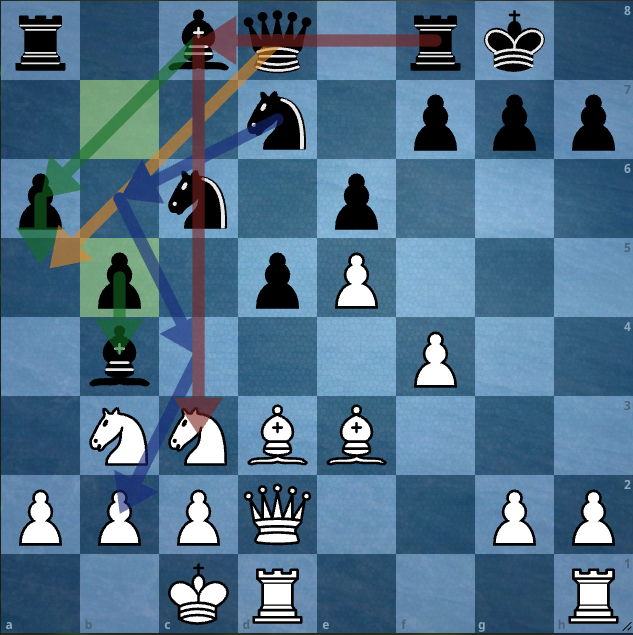
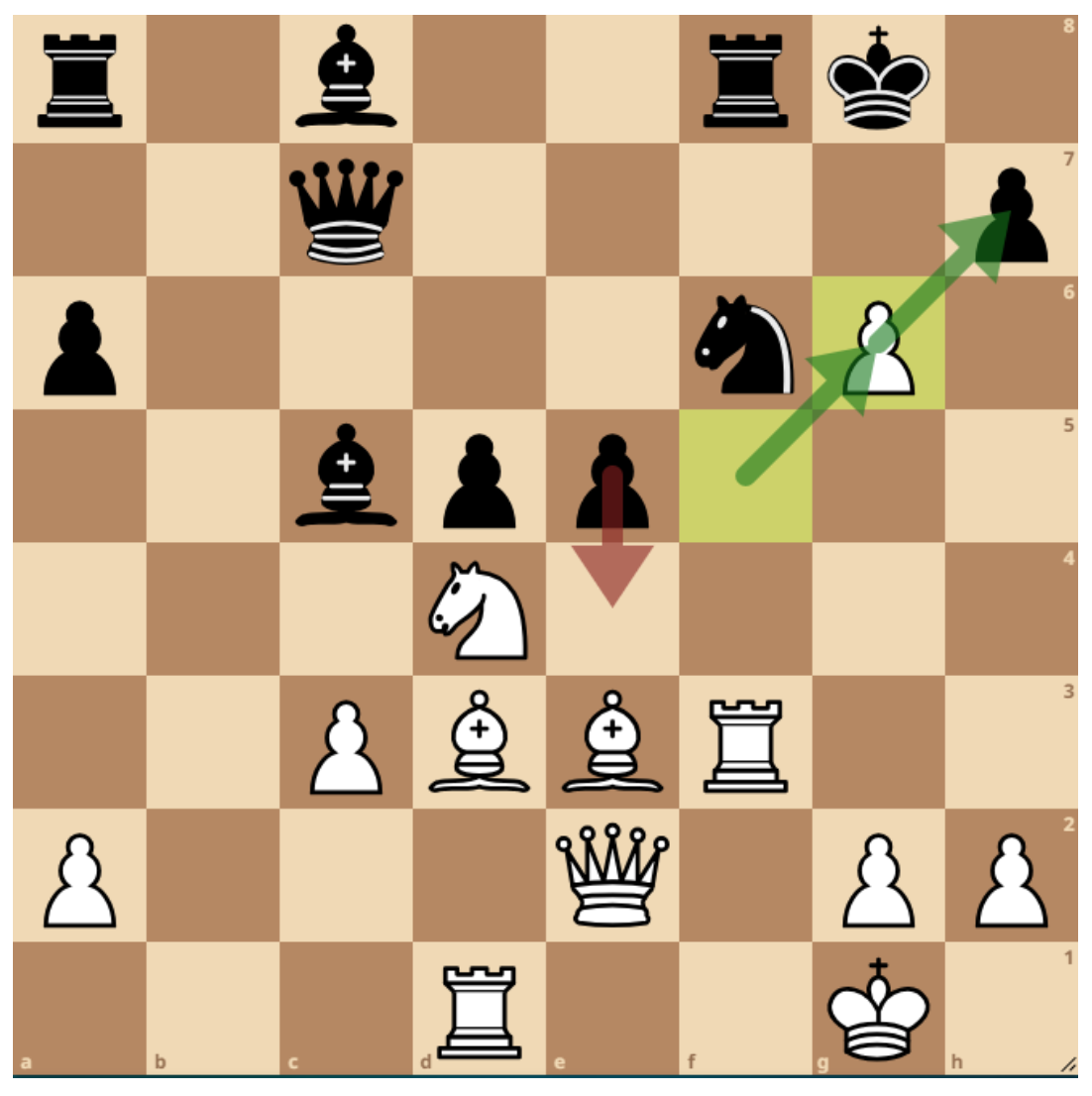
<p>Black also has some typical ideas in its arsenal, but the delicacy of the position is choosing when to do what. Black’s main sacrifice idea is Knight takes b2, destabilizing the knight on c3. Black also wants to play b4 and bring the queen through a5, or, in some positions, play b4-a5-Ba5 to exchange White’s powerful bishop on d3.</p>

<p><img src="/assets/docs/new/2026-10-12-a-weekend-of-chess-at-4ncl/image-1.png" alt="Chess position with arrows illustrating Black's queenside plans" /></p>

<p>A few moves and trades later, I decide to bring my knight back to e7. This move was multi-purpose for me. On one hand, I send that knight towards the kingside for defensive purposes. For example, if White threatens mate with Qh5, I can now choose between playing g6 or Ng6. The knight also holds the f5 and d5 squares, since White is always on the lookout for f5 and N takes d5 ideas. On the other hand, I open lines for my rooks towards the White king.</p>

<figure class="chess-replay" data-chess-replay="" data-start="r1bq1rk1/5ppp/p1n1p3/1p1pP3/1bn2PP1/1NNBB3/PPP2Q1P/2KR3R w - - 3 15" data-moves="15. Bc5 Bxc5 16. Qxc5 Bd7 17. g5 Rc8 18. Qf2 Ne7" data-orientation="white" data-autoplay="off" data-speed="1200" data-loop="false" data-loop-delay="2000" data-theme="default" data-arrows="" data-arrow-width="1" data-pieces-file="pieces/standard.svg" data-label="">
  <div class="chess-replay__fallback">
    <p><strong>Chess sequence:</strong> 15. Bc5 Bxc5 16. Qxc5 Bd7 17. g5 Rc8 18. Qf2 Ne7</p>
  </div>
  <p class="chess-replay__credit">
    Chess pieces by <a href="https://commons.wikimedia.org/wiki/Category:SVG_chess_pieces/Standard" rel="noopener">Cburnett</a>,
    <a href="https://creativecommons.org/licenses/by-sa/3.0/" rel="license noopener">CC BY-SA 3.0</a>
  </p>
</figure>

<p>When I landed with my queen on a5, I felt I was starting to take over the initiative. The computer only gives Black a -0.5 advantage, but my opponent’s demeanour had shifted. He was trailing on the clock, with 11 minutes left at move 22, and finding the right way to defend the a2 pawn is not easy. Kb1 looks simple, but it’s scary. Had he played Kb1, my idea was to continue with Qb4, amping up the pressure. Instead, he went wrong with Qh4 and a3.</p>

<figure class="chess-replay" data-chess-replay="" data-start="2r2rk1/4nppp/p3p3/qp1pP1P1/2n2P2/3B4/PPP1NQ1P/2KR2R1 w - - 4 23" data-moves="23. Qh4 Ng6 24. Bxg6 fxg6 25. a3 b4 26. Rg3 bxa3 27. bxa3" data-orientation="white" data-autoplay="off" data-speed="1200" data-loop="false" data-loop-delay="2000" data-theme="default" data-arrows="1: h4h7 green; 4: g8f7 green" data-arrow-width="1" data-pieces-file="pieces/standard.svg" data-label="">
  <div class="chess-replay__fallback">
    <p><strong>Chess sequence:</strong> 23. Qh4 Ng6 24. Bxg6 fxg6 25. a3 b4 26. Rg3 bxa3 27. bxa3</p>
  </div>
  <p class="chess-replay__credit">
    Chess pieces by <a href="https://commons.wikimedia.org/wiki/Category:SVG_chess_pieces/Standard" rel="noopener">Cburnett</a>,
    <a href="https://creativecommons.org/licenses/by-sa/3.0/" rel="license noopener">CC BY-SA 3.0</a>
  </p>
</figure>

<p>When I saw a3, I knew I had to go for b4, which is exactly the kind of pawn break they warn you about when they tell you not to move the pawns in front of your king. After White recaptured on a3, there were a few ways for Black to bring it home, the most obvious being to capture the pawn with the knight. I didn’t choose the most accurate continuation according to Stockfish, but I think I chose the prettiest one, ‘cause look what happened:</p>

<figure class="chess-replay" data-chess-replay="" data-start="2r2rk1/6pp/p3p1p1/q2pP1P1/2n2P1Q/P5R1/2P1N2P/2KR4 b - - 0 27" data-moves="27... Qb5 28. Rb3 Nxa3 29. Nd4 Qxb3" data-orientation="white" data-autoplay="off" data-speed="1200" data-loop="false" data-loop-delay="2000" data-theme="default" data-arrows="1: b5b2 green; 3: c8c2 green" data-arrow-width="1" data-pieces-file="pieces/standard.svg" data-label="">
  <div class="chess-replay__fallback">
    <p><strong>Chess sequence:</strong> 27... Qb5 28. Rb3 Nxa3 29. Nd4 Qxb3</p>
  </div>
  <p class="chess-replay__credit">
    Chess pieces by <a href="https://commons.wikimedia.org/wiki/Category:SVG_chess_pieces/Standard" rel="noopener">Cburnett</a>,
    <a href="https://creativecommons.org/licenses/by-sa/3.0/" rel="license noopener">CC BY-SA 3.0</a>
  </p>
</figure>

<p>I ended the game with a QUEEN SACRIFICE! The kind of finish that can turn a slightly shitty weekend into a pretty good one ☺️ I was also very pleased that I won with this line of the French Defense, because I have struggled with it in the past. This just means that analyzing those previous losses in this line paid off.</p>

<p>In terms of rating, I think it will stay unchanged for October. But it’s okay, the lack of a step backwards is a step forwards in this case ;)</p>

<p>If you liked the content of this article, you might enjoy following my “serious chess” sessions live on <a href="https://www.twitch.tv/blitzingmaria">Twitch</a>, or my game analysis videos on <a href="https://www.youtube.com/@Maria-qdreamer">YouTube</a>. You might also like my posts on Take Take Take 😍</p>

<iframe src="https://taketaketake.com/embed/posts/r97dyh50at58mbah2cs1x8a80s8fwpvw?theme=dark" width="400" height="560" style="display:block;width:100%;max-width:400px;height:auto;aspect-ratio:400/560;margin:1.5rem auto;border:0;border-radius:16px" loading="lazy" title="Post by Maria on Take Take Take"></iframe>

<p>Take Take Take is a new chess platform, founded by Magnus Carlsen and powered by lichess.org, that allows you to share snippets from your games and follow your friends’ and other creators’ posts! It also offers puzzles, generated commentary for each game review, and cool animations when you finally land a brilliant move 🤩 Use my <a href="https://taketaketake.com/join?ref=MARIA">referral link</a> to join in on the fun!</p>

<iframe src="https://taketaketake.com/embed/posts/r97dvk3x4d47r39n8b2pg0n0fd8fmddy?theme=dark" width="400" height="560" style="display:block;width:100%;max-width:400px;height:auto;aspect-ratio:400/560;margin:1.5rem auto;border:0;border-radius:16px" loading="lazy" title="Post by Maria on Take Take Take"></iframe>

<p>Thank you so much for making it to the end of this article. I appreciate you ☺️</p>

<p><img src="/assets/docs/new/2026-10-12-a-weekend-of-chess-at-4ncl/IMG_7481.jpg" alt="Maria at the chess tournament" /></p>]]></content><author><name>Maria Ciocan</name></author><category term="Other" /><summary type="html"><![CDATA[It’s autumn. For some, this means school is starting. For others, the summer of internships or vacationing is over, and it’s time to join a grad scheme or update their CV. For me, autumn means over-the-board chess is back! (Isn’t it funny, by the way, how much the Internet has shaped chess culture? Back in the day, over-the-board chess was just chess! Amazing!)]]></summary></entry><entry><title type="html">Side-questing: improv comedy at the Fringe</title><link href="https://mariaciocan.github.io/2026/08/26/sidequesting-at-the-fringe.html" rel="alternate" type="text/html" title="Side-questing: improv comedy at the Fringe" /><published>2026-08-26T00:00:00+00:00</published><updated>2026-08-26T00:00:00+00:00</updated><id>https://mariaciocan.github.io/2026/08/26/sidequesting-at-the-fringe</id><content type="html" xml:base="https://mariaciocan.github.io/2026/08/26/sidequesting-at-the-fringe.html"><![CDATA[<p>Every August, Edinburgh becomes the host of the world’s largest performing arts festival, the Edinburgh Festival Fringe. First established in 1947, the Fringe is now the face of theatre and comedy internationally, and has helped launch the careers of many talented artists. For example, the show Fleabag, written by Phoebe Waller-Bridge, was performed at the Fringe before being adapted for television.</p>

<p><img src="/docs/assets/pictures/2026-08-26/image.png" alt="Fleabag show image" /></p>

<p>With 4,000 performances to choose from, visitors to Edinburgh and locals can watch a show every hour from 10 in the morning to 1am if they want to. Edinburgh’s Old Town is stunning, with many of its impressive buildings briefly teleporting you back hundreds of years. It is a very walkable city, if you don’t mind catching your breath from time to time! Thanks to the city’s old defensive walls, many of Edinburgh’s streets are uphill, and in some areas, if you look down, you will discover that the street you’re on is actually on top of another street! The bars, plazas and cafes are bustling with people, painting the city centre in lively colours.</p>

<p><img src="/docs/assets/pictures/2026-08-26/IMG_3328.jpeg" alt="Street in Edinburgh's Old Town" /></p>

<p>One thing I like in particular about the way the festival is organised is that it allows you to be spontaneous. You can be having a beer in one of the squares at 6.50, and then be watching a completely improvised musical show by 7.05. Yes, better-known shows, such as Garry Starr’s Classic Penguins, require a little bit more planning as they tend to be sold out, but the good news is there are so many shows, plenty of them free, that you will surely find something to watch. In fact, I would say this is part of the charm - that you can take a chance with some genres of shows, go watch performances you wouldn’t have normally chosen out of a line-up, and forget for a second about reviews, endorsements or Netflix specials.</p>

<p><img src="/docs/assets/pictures/2026-08-26/IMG_5613.png" alt="Street art in Edinburgh" /></p>

<h2 id="so-what-was-i-doing-in-edinburgh">So what was I doing in Edinburgh?</h2>
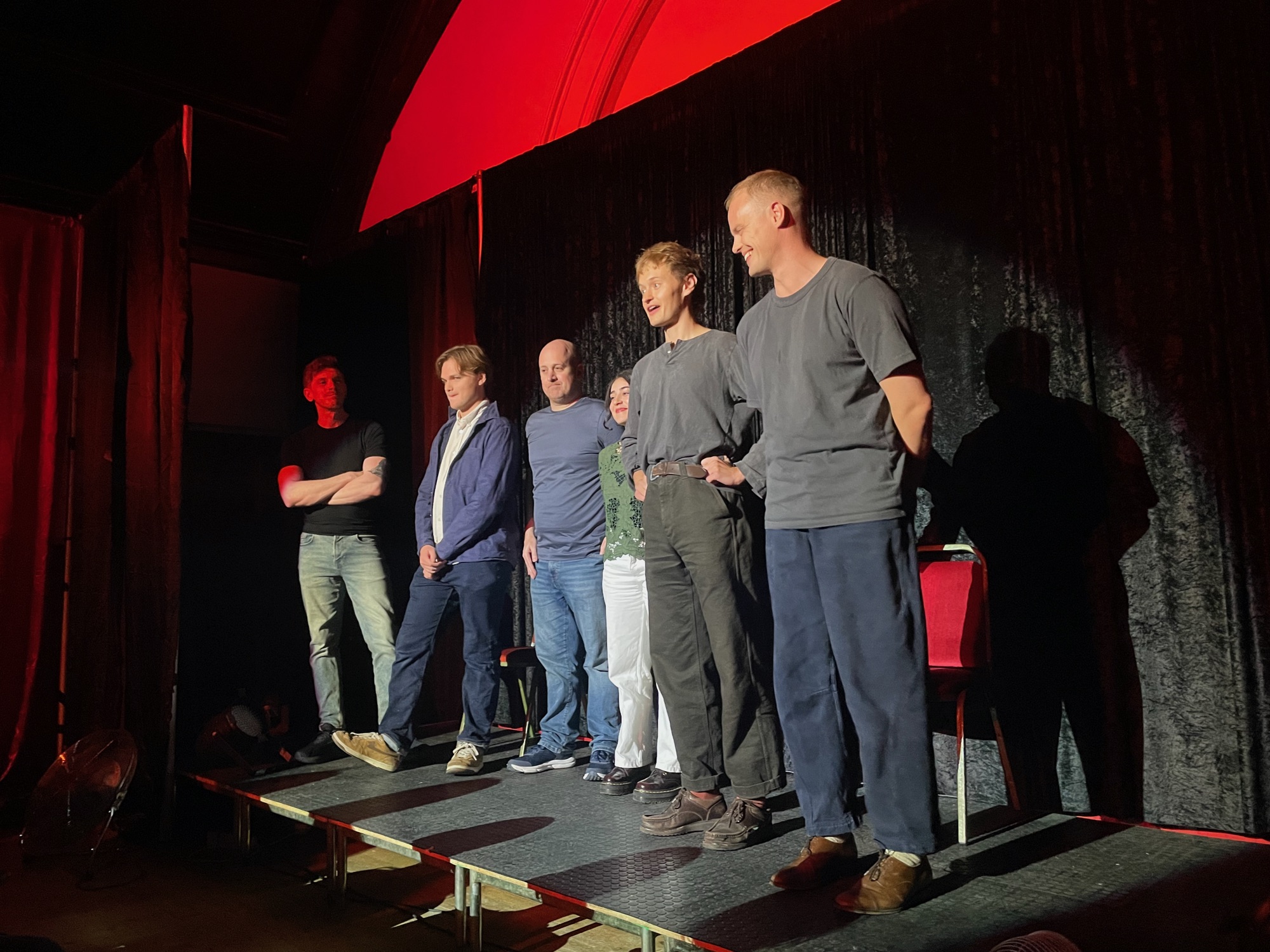
<p>Well, besides enjoying the great atmosphere of the Fringe, I actually went as a performer! I was on stage for six nights as part of the show <a href="https://www.edfringe.com/tickets/whats-on/adult-lessons">Adult Lessons</a>, an improv comedy show inspired by the lessons - serious, bizarre, or funny - we’ve all learnt as part of becoming an adult. Adult Lessons was put together by my amazing friends, George and Charlie. We were also joined by the lovely Cal, Felix, and Dave.</p>

<p><img src="/docs/assets/pictures/2026-08-26/IMG_8252.jpeg" alt="Performers during intro" /></p>

<h2 id="what-is-improv">What is improv?</h2>
<p>Improvisation theatre is… well, all made up. It takes a different shape and a different trajectory every night. A performer walks on stage with a blank mind, and then, starting from a suggestion - often just a word from the audience - starts building brick by brick an entire universe around them. <br /> One night started from an apple, which led to unraveling the strange corporate ladder of Microsoft, continued by bringing in Jesus as an Apple Store Genius, and finished with two chickens having marital troubles after being unable to lay an egg. The audience never knows where things might be heading, and most of the time, neither do we, the performers! Improv theatre can traverse a wide variety of emotions, whereas improv comedy is known for keeping things light, funny, and a bit silly.</p>

<h2 id="what-was-the-format-of-my-show-adult-lessons">What was the format of my show, Adult Lessons?</h2>
<p>After the introduction, we would ask the audience to shout out an object. Apple, chalice, revolver were some of the words we received. Then, two people would walk on stage and start building a scene. This can be anything - the performers act upon the association they made with the given word. On the sides, the other performers watch. At any point, they are able to walk on stage and alter the universe that is being built. Whoever jumps in can either sweep both performers off and start fresh, or tag out one character and carry on with the other. They can also join in as a supportive character. This means that while you’re on the side, you have the important job of listening in closely to what is happening on stage, so you can come up with a clever addition, transition or callback later on. This is sometimes even harder than being on stage - but the satisfaction of finding a funny callback or alteration is priceless.</p>

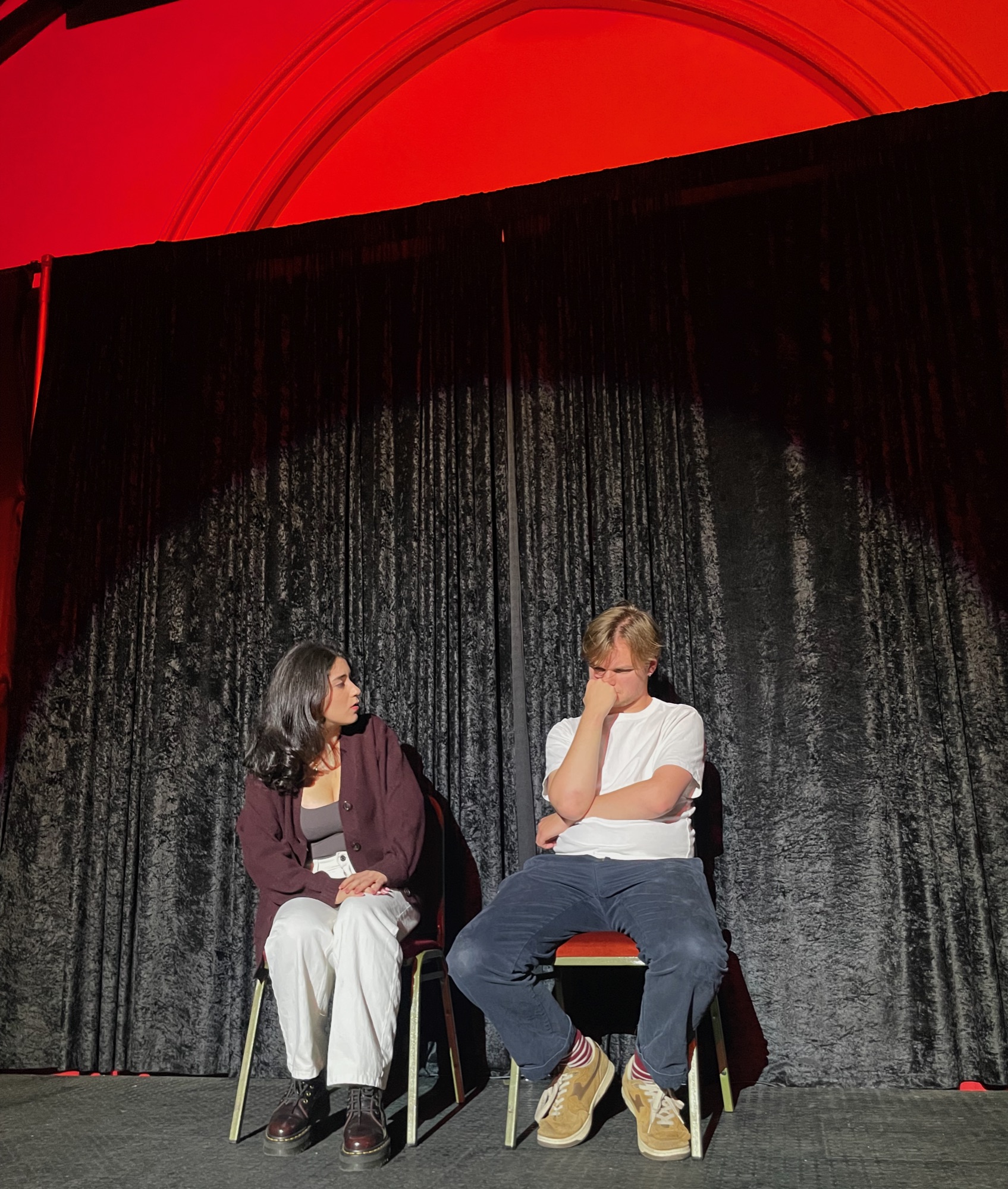
<p><img src="/docs/assets/pictures/2026-08-26/IMG_8256.jpeg" alt="Maria and Felix on stage" /></p>

<p>In the second part of the show, we would ask members of the audience for a lesson they’ve learned as part of becoming an adult. This can be something serious - such as always check whether the interest rate on your loan is fixed or variable - or something a little bit more goofy, such as never go to the loo with your phone in the back pocket. Then, taking inspiration from the wisdom shared by our public, we would start a new set of scenes.</p>

<h2 id="ok-but-is-it-really-all-made-up">OK, but is it really all made up?</h2>
<p>Yes! <br /> It’s like sitting down at the chess board without knowing about the Queen’s Gambit, the Sicilian or Ruy Lopez. Scary, right?! But just like in chess, there are some guidelines. The most famous “rule” (it’s improv, there are no rules, that’s actually the first rule) is <em>yes, and</em>. The <em>yes, and</em> paradigm basically encourages performers to run with what their partner has given them, instead of playing contrarian and therefore being stuck in “negotiating” the parameters of a scene. For example, if your scene partner tells you <i>“You forgot your wallet at my house”</i>, going with that will most likely move the story forwards better than <i>“No, I didn’t, it’s in my pocket”</i>. <br /> Of course, there are many nuances to this, it’s never as simple as just agreeing with everything your partner says or does. Stories need conflict, tension. So a skilled improviser will know how to tread the line between <em>yes, and</em> and being an opposing force.</p>

<p>Another common guideline of improv is to not rely too heavily on asking questions. Since both scene partners are making stuff up on the spot, asking your partner too many questions places the responsibility of building the scene unevenly on them. <br /> Another piece of advice is to avoid starting a scene with a very heavy offer too often - this is a bit like being cautious about committing your pawn structure too much too early in the game. You may think that since it’s all made up, it’s better to just start a scene by being very clear about what is happening. Something like <i>“I’m going into labour! You have to take me to the hospital!”</i>. This kind of entry removes a lot of the uncertainty of a scene - you don’t need to blindly act while also trying to discover where or who you are, and what your relationship is with your scene partner. This kind of intro establishes a big chunk already: you are about to give birth, and the next part of the scene will be about trying to get medical care. Your scene partner can decide to be helpful or completely useless, but they cannot easily change the terms of the scene - saying something like <i>“Jack, you’re dreaming that you’re pregnant again”</i> would probably make things very confusing, albeit funny. <br /> This brings me to another tricky thing about improv, more specifically about improv comedy - finding balance between funny and developing a story. Sometimes when creating a funny moment, you back yourself into a corner from where it’s hard to continue. In the case of Jack dreaming of pregnancy, the ridiculousness of the situation can be very funny, but as a plot device, it might make it very hard for the scene partners to continue building from it. Therefore an improviser must learn to navigate these situations gracefully, by being quick on their feet and by knowing when to cut a scene and move on.</p>

<p><img src="/docs/assets/pictures/2026-08-26/IMG_5548.jpeg" alt="Maria" /></p>

<p>The unique way in which each player associates words and ideas makes improv interesting and surprising. Try building a chain of four words, starting from <i>“potato”</i>, where each word is the first thing the previous one makes you think of. Mine went <i>potato → roots → worm → big bang → Sheldon Cooper</i>. What was yours? Bet it wasn’t the same as mine, was it? 😝 <br />
You might have experienced during this mini exercise of free association the desire to “police” your connections. To be honest, the first time I started from <i>“potato”</i>, I went to <i>“burger”</i>, then <i>“America”</i>, and then <i>“Donald Trump”</i>, which is where I stopped myself, thinking, no, this is not the direction I want. And while I’m happy I don’t have to come up with more words after Donald Trump, sometimes this self-surveillance can inhibit creativity and make you anxious. <br />
Like I said before, the uniqueness of each person’s chain of associations is what makes the magic of improv. You and another person start from a word, let’s say “space”, and from the same suggestion, one of you is mimicking the absence of gravity, while the other starts describing how they find their partner suffocating. And at the intersection of that you have… two astronauts with intimacy problems stuck on a ship together? To add even more to the magic, you and your scene partner might start a story from completely different creative places - only to manage to build towards the same joke, idea or reference. Oh, the joy! <br />
Well, that was a very long way of confirming: yes, it’s all made up on the spot.</p>
<h2 id="am-i-good-at-improv-comedy">Am I good at improv comedy?</h2>
<p>Honestly, no idea. It’s very hard to judge oneself, and I have definitely oscillated during my six nights in Edinburgh between thinking that I am hilarious and fearing that I am being awkward or uninteresting.</p>
<h2 id="so-how-did-i-start-doing-improv-comedy">So how did I start doing improv comedy?</h2>
<p>Well, the most straightforward answer is, thanks to a friend. Not long after I decided to start my own Twitch channel, my friend pitched improv classes to me. During my experience with QueenWatcher, the Twitch channel I first started streaming chess on, I found I was often experiencing a lot of anxiety after a stream. I’ve always been a bit of a sore loser when it comes to chess, but there was more to it. I wasn’t anxious just about my chess, I felt anxious more broadly about being perceived publicly. <br /> 
I considered quitting. But I loved streaming as an avenue for me to connect with others and with my own chess journey. So when the idea of improv was introduced to me, I thought this would be a great way to explore this whole “performing in front of the world” from a different angle. Almost two years later, with the support of our lovely community, I am still streaming chess, and feeling great about it. If anything, I just wish I had time to do it more often! And improv became its own thing in my life, full of surprises and challenges.</p>
<h3 id="challenge-one-putting-yourself-out-there">Challenge one: putting yourself out there</h3>
<p>Walking on stage with little more than what pops through your head requires courage; courage to be seen, to be vulnerable, to be judged. Any kind of performance art asks you to give part of yourself to the audience for them to decide what to do next: be sceptical, or invested, laugh at your joke, or let the room fill up with the stale panic of silence. And if you’re reading this and thinking: “it would be silly of people to judge something that they haven’t tried themselves, or to mock another person for trying to put themselves out there”, then, congratulations! You have successfully evaded the unsettling embrace of cringe culture.</p>

<p>Cringe culture, as described by Wikipedia, “is an Internet phenomenon and neologism characterized by the mockery and ridicule of content, behaviors, or expressions deemed embarrassing or awkward. The term cringe evolved semantically from describing personal secondhand embarrassment to becoming a dismissive label applied to various forms of online expression.” (<a href="https://en.wikipedia.org/wiki/Cringe_culture">Wikipedia</a>) Cringe culture is, in my opinion, partly responsible for the self-consciousness I and many of my peers have experienced, both online and in the real world.</p>

<p><img src="/docs/assets/pictures/2026-08-26/IMG_5614.jpeg" alt="Spooky Dookie duo" />
<i>Spooky Dookie duo, one of my favourite shows of this year’s Fringe.</i></p>

<p>Improv can be many things: hilarious, chaotic, nonsensical, surprising, satisfying, and… yes, sometimes a little bit awkward. So the challenge? Getting out of your own head. The reward? There’s a whole list: discovering new facets of your personality, feeling empowered by not letting a hypothetical and inconsequential emotion make decisions for you, gaining confidence, and finding a community of people that are kind, graceful, and supportive. <br />
Feeling embarrassed is part of the human experience. It’s unavoidable. Kind people know that. If you surround yourself with kind, genuine people, even if you embarrass yourself, that will not change the way they care about you. Feeling embarrassed is part of the human experience.</p>

<h3 id="challenge-two-the-language-element">Challenge two: the language element</h3>
<p>As you might already know, I was born and raised in Romania. I moved to the UK when I was 18 years old. Fun fact: I packed my suitcases and left my hometown to attend university in London without ever having been to England before. But that’s a story for another time. <br /> I started studying English very early, probably at eight years old. In Romania, there is a lot of emphasis placed on being able to speak English, so I was always striving to get a perfect grade in English class. When I turned 13 and joined social media, I started consuming content in English every day. Nowadays, I live in London, I work for an American company, I have several foreign friends, and even my partner is non-Romanian. So existing in English is at this point second nature. <br /> 
However - and this is not at all how my 17-year-old self envisioned things - I do not speak perfect English. And I do not have a British accent. Sometimes, if I try hard enough, I can fool fellow foreigners in the UK. I mishear things in loud environments or when facing unfamiliar accents, and I make mistakes when I’m in a hurry or tired. I had to talk myself out of cringing ;) many times after realising I’d made a mistake. I had to learn to step away from seeing the embarrassment of a grammar mistake and instead focus on my own courage and skill for living my life in a language that is, in many ways, not my own. <br />
Yet not being a native English speaker adds an extra layer of complexity for me when improvising. I often fear I’m a second behind everyone else, and worry that a joke would have landed better if I had chosen one word over another. I can distinctly recall the sweat of panic that would come over me when I wouldn’t understand exactly what my scene partner had just told me. A few times this led to comical situations - even unbeknownst to me. One time my scene partner described themselves as the director of “United Inc.”, and it took everyone by surprise when I came on stage to pitch an idea for a new type of ink… But everyone went with it - talk about <em>yes, and</em>! <br />
Reflecting on how speaking in English is affecting my improv journey, I made up my mind about a few things. Firstly, that at some point I have to try to join an improv group in my native language, Romanian. If nothing else, just to be able to make a better comparison. <br />
Secondly, that the more general theme of how languages shape our experiences is a very interesting one, and I should keep reflecting on it throughout my life. <br />
Thirdly, that sometimes feeling like I have an “English self” and a “Romanian self” can be a very interesting thing to explore in my art. When you’re in an improv scene, you are both acting as a character and building a character at the same time. I think hearing myself creating in Romanian a very different character than myself - a badass detective or an unhinged villain, for example - could feel stranger, and therefore inhibit me. Whereas improvising in English sometimes adds a layer of separation between the improv character and the self. <br />
In a way, when I moved to England, I had to make a new self for myself. Not from scratch, of course. But the jokes I would have made, the stories I would have told until that point had to be translated, adapted. At first, my English self was trying to be a translated copy of my Romanian self. Now, it has a life of its own. But it’s more used to the need to build itself on the go.</p>

<p>Anyway - the complexity of the distinction I am trying to make currently transcends language itself. That’s a convoluted way of saying I haven’t yet fully understood the many facets of living life as an immigrant. I couldn’t explain it in Romanian either. I’ll make sure to write an update post once I do ;)</p>
<h3 id="challenge-three-the-lack-of-a-progress-chart">Challenge three: the lack of a progress chart</h3>
<p>When I was playing chess competitively growing up, my FIDE rating was always a very clear indicator of improvement. Increasing my rating has always been a source of motivation for me. But in improv there is no rating, no chart, no clear leaderboard. For one, because arts are subjective, whereas chess is not. “Beauty is in the eye of the beholder”, right? Not even the amount of laughter in the audience can serve as a good measure for progress. Therefore, it was sometimes challenging for me to go to improv practices without a clear, measurable objective. “Have fun” or “feel good about myself” are not the kind of things you can run a quantitative analysis on. But there’s a point to be made here. In the era of productivity-maxing, step trackers, sleep scores, calorie counters, and Instagram followers, maybe not having something that can be reduced to a number is a good thing. Maybe my own desire to keep doing something is all the validation I should need.</p>

<h2 id="some-final-thoughts--random-things">Some final thoughts &amp; random things</h2>
<p>Doing improv comedy has been a fun way to discover more about myself, acquire a new way of artistic expression, and become part of a wonderful community! The Fringe festival in Edinburgh is incredibly welcoming, diverse, and well organised. If you were thinking of visiting Edinburgh next year, I really recommend going in August. It’s more crowded, but for once the crowds are a good thing: they make the city feel more lively and fun. Oh, but make sure you pack a sweater, as Edinburgh in August is still quite chilly!</p>

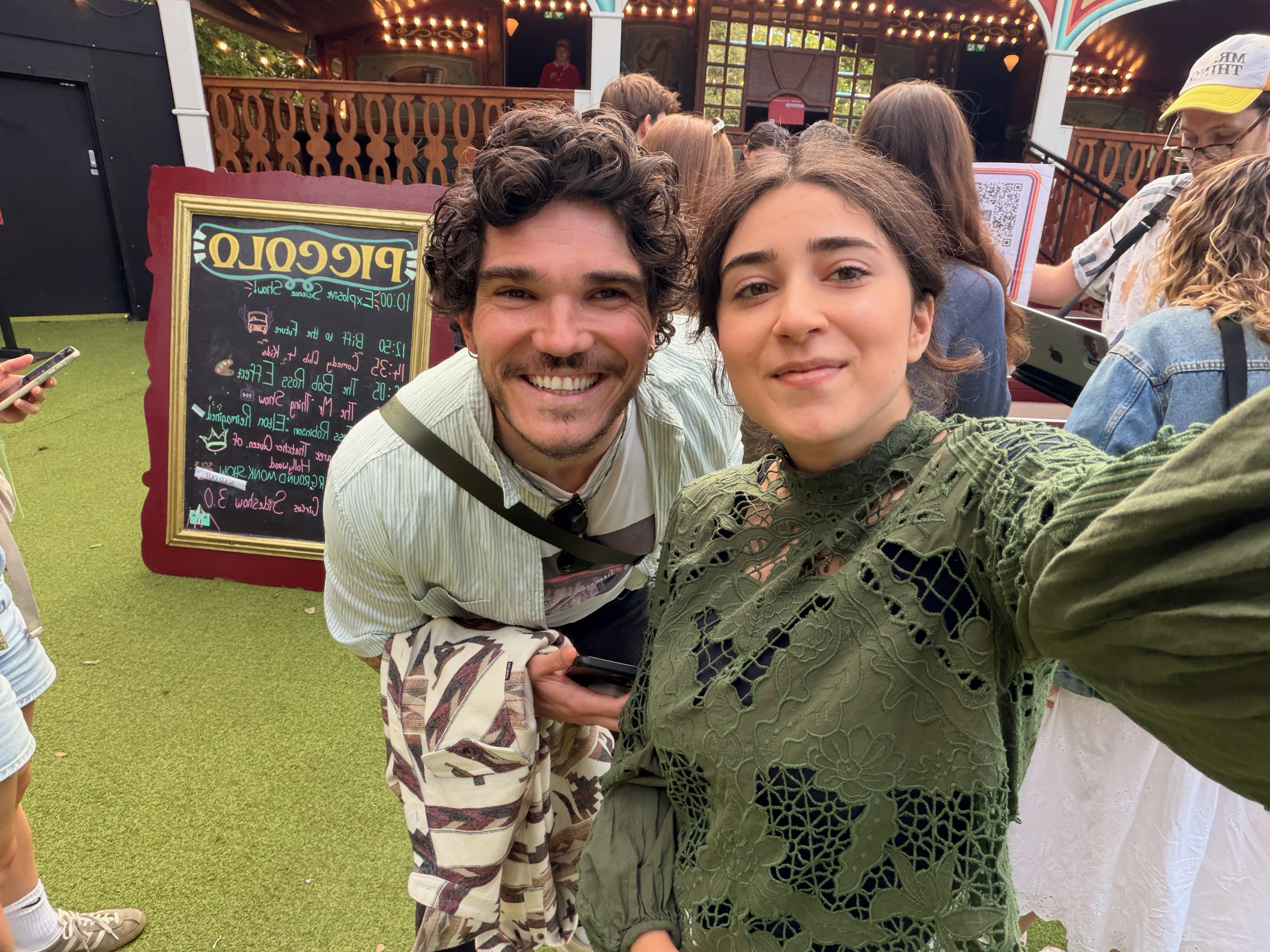
<p>I met Fra Fee, one of the main characters in Netflix’s short show, <em>The Unchosen</em>. When my sister visited me in London a couple of months ago, we were both hooked by the show and ended up staying up until 3 in the morning to finish it. Fra was very kind when I approached him, unlike his character in the show, who… well, I won’t spoil it for you.</p>

<p><img src="/docs/assets/pictures/2026-08-26/IMG_5404.jpeg" alt="Selfie with Fra Fee" /></p>

<p>I would also like to take the opportunity in this random section to give a shoutout to the organisers of the Fringe for always having tampons and pads in the public bathrooms! This small gesture shows consideration towards women. <br />
I also saw Samantha Spiro at the Pleasance, the main venue of the festival. I recognised her from her character, Maureen, in the Netflix show <em>Sex Education</em>.</p>

<p>That’s it! Thank you so much for making it to the end of this article. Let me know if I inspired you to try out a hobby you’ve been meaning to take up for a while, but didn’t have the courage to!</p>

<hr />

<p><strong>Come hang out!</strong> I stream chess on Twitch and post videos &amp; reels on YouTube &amp; Instagram.</p>

<p><a href="https://www.twitch.tv/blitzingmaria" title="Twitch"><img src="https://img.shields.io/badge/Twitch-9146FF?style=for-the-badge&amp;logo=twitch&amp;logoColor=white" alt="Twitch" /></a>
<a href="https://www.youtube.com/@Maria-qdreamer" title="YouTube"><img src="https://img.shields.io/badge/YouTube-FF0000?style=for-the-badge&amp;logo=youtube&amp;logoColor=white" alt="YouTube" /></a>
<a href="https://www.instagram.com/blitzingmaria" title="Instagram"><img src="https://img.shields.io/badge/Instagram-E4405F?style=for-the-badge&amp;logo=instagram&amp;logoColor=white" alt="Instagram" /></a></p>]]></content><author><name>Maria Ciocan</name></author><category term="Other" /><summary type="html"><![CDATA[Every August, Edinburgh becomes the host of the world’s largest performing arts festival, the Edinburgh Festival Fringe. First established in 1947, the Fringe is now the face of theatre and comedy internationally, and has helped launch the careers of many talented artists. For example, the show Fleabag, written by Phoebe Waller-Bridge, was performed at the Fringe before being adapted for television.]]></summary></entry><entry><title type="html">Has AI made me dumber?</title><link href="https://mariaciocan.github.io/2026/07/18/has-AI-made-me-dumber.html" rel="alternate" type="text/html" title="Has AI made me dumber?" /><published>2026-07-18T00:00:00+00:00</published><updated>2026-07-18T00:00:00+00:00</updated><id>https://mariaciocan.github.io/2026/07/18/has-AI-made-me-dumber</id><content type="html" xml:base="https://mariaciocan.github.io/2026/07/18/has-AI-made-me-dumber.html"><![CDATA[<p><span style="font-size: smaller;"><em>An anxious girly’s diary entry on tech &amp; self-esteem</em></span></p>

<p>Friday afternoon, as I was logging off after a long day of telling Claude what to do, I ✨seemingly✨ out-of-nowhere started to reflect on how different the challenges I face in my work are now compared to three and a half years ago, in the pre-ChatGPT era.</p>

<p>But before I expand on my reflections, let me give you a bit of background about me and about what to expect from this post. I have been working as a Software Engineer for almost four years, and I have a BSc in Computer Science. In this post, I am not going to defend a pro/anti AI sentiment, nor will I explore ethical, scientifical, or environmental considerations surrounding AI. Those conversations are important and I encourage you to dive into them - but here I will simply ramble on how AI has shaped my work, and how it shaped how I feel about myself.</p>

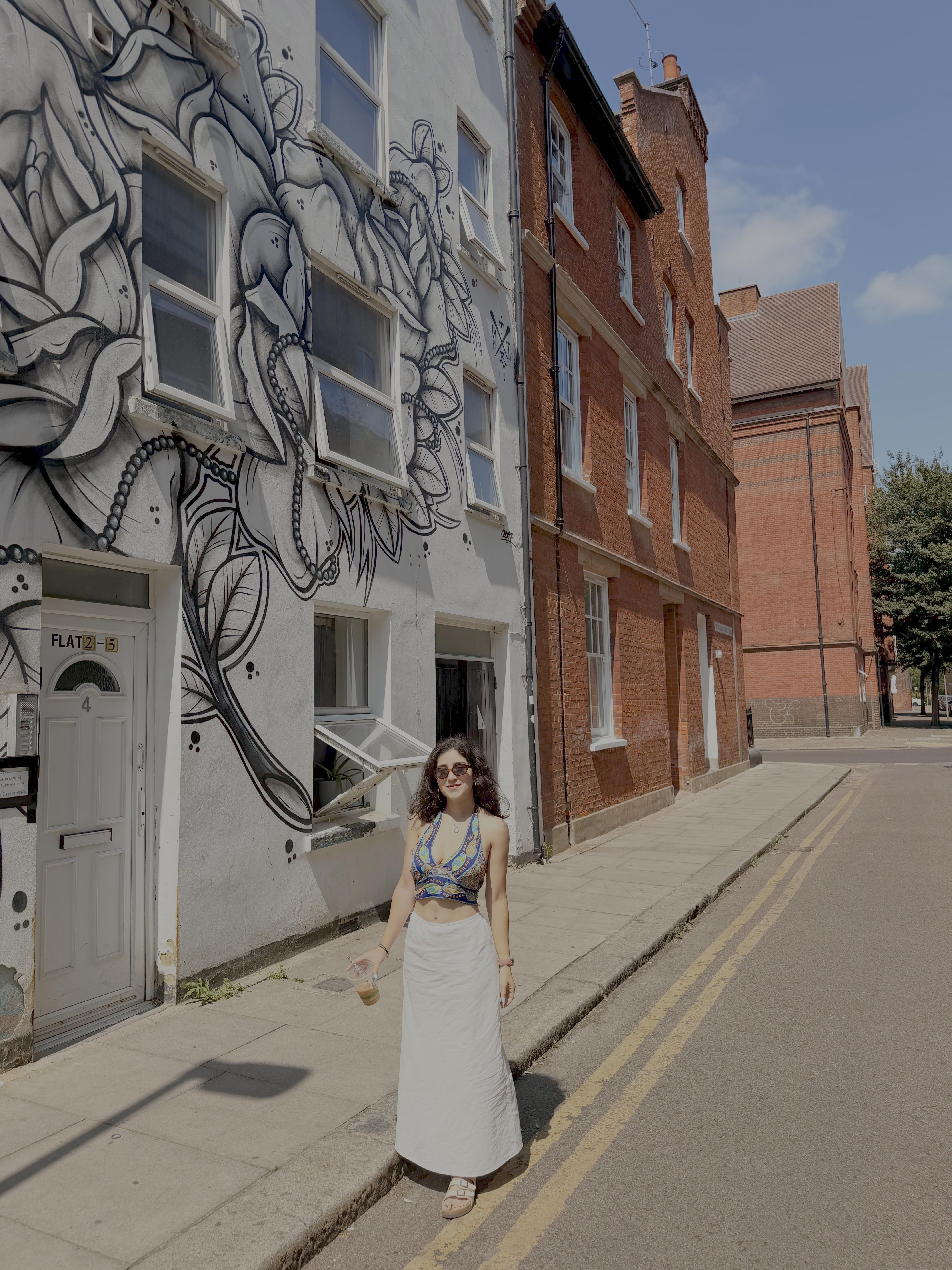
<p><img src="/docs/assets/pictures/2026-07-18/IMG_3756.png" alt="out of context picture of Maria on a sunny London day" /></p>

<h3 id="so-how-exactly-has-my-work-as-a-software-engineer-changed-since-the-boom-of-llms">So how exactly has my work as a software engineer changed since the boom of LLMs?</h3>

<p>First of all, I am writing much less code. Mind you this does not mean I am shipping less - on the contrary. LLMs have made it incredibly easier to generate new code. At first, in 2023, they were mostly only good at creating template code - for example unit tests or test data. So the split between the human and the machine was truly like this: let the LLMs do the repetitive boring stuff, while developers continue to do the reasoning and innovating.</p>

<p>But I don’t need to tell you that since then they have gotten much better. Now it’s enough to list well the requirements of a task, and have a general idea of what your code needs to do, and voila! An agent can do the work for you end-to-end. This means that as a developer you need to spend less time familiarising yourself with a new codebase. As long as you know what needs to be achieved, you can leave it to the agent to understand where it needs to plug code changes. Getting started with a new codebase used to be quite time-consuming, but AI tools have made it so that you can be in-and-out of an unknown codebase within the day, and with your <a href="https://docs.github.com/en/pull-requests/collaborating-with-pull-requests/proposing-changes-to-your-work-with-pull-requests/about-pull-requests">PR</a> merged. This has helped me get things done significantly faster. But it has also deprived me of the need to understand things in depth. In a way, instead of me defining the context window of an agent, the agent is defining my context window: <i> this is what you need to know, human - leave the rest up to me. </i></p>

<p>However, one shouldn’t fall into the trap of believing that just because a process is longer or more tedious, it’s necessarily better or more worth-while. Why walk from London to Paris when you can take a train? When it comes to getting your work done in a company, not needing to burden yourself with convoluted business details can be quite desirable. Spending 5 days deciphering a long-gone coworker’s work from 10 frameworks ago just to change one line doesn’t exactly sound rewarding.</p>

<p>But there’s another catch - a good developer must strike the perfect balance between what needs and what doesn’t need her attention. You put too much distance between your context and the details the AI can deal with, and you are no longer able to tell when the agent is making sub-optimal decisions. (<em>Have another LLM review in adversarial mode, some would say …</em>). You are also going to have a much harder time returning to a task after a while to build something else on top of it. What I’m getting at is quite intuitive - doing a task yourself will always make more things stick with you than reading someone else’s “here’s how I did this” report. But like I said before - not all information at your work is worth collecting.</p>

<p>LLMs have also made it so roles are becoming increasingly tech-agnostic. The conversations are no longer centred on stack - should we use Python or Go, and what developers have experience in what programming language? Instead, when a task needs to be done, the developer is expected to just jump in whatever programming language is required for it. An LLM can handle syntax, conventions - everything, really.</p>

<h3 id="but-why-be-sad-when-youre-doing-more">But why be sad when you’re doing more?</h3>

<p>I started coding in high school, and one of the things that convinced me to study computer science was a website I built during a summer camp. The website was supposed to allow you to build your own virtual flower bouquet, with recommendations, and order it - had this ever become a business idea. It had a rudimentary username and password login, stored unencrypted in a database on my laptop, and a girly flowery UI that took me days to put together. I remember feeling so empowered when things started working. I felt that I don’t just know things, I do things.</p>

<p>Now this kind of project would put <a href="https://github.com/features/copilot">GitHub Spark</a> to work for probably 20 minutes. At the end of those 20 minutes, everything would be fully built, and you could choose between 10 different colour themes. So if I ever need to build a virtual flower shop website - or, let’s say, a script that builds a pie-chart for my wins and losses during my chess streams, there’s no need for me to spend days building it. (<i>But if I wanted to, I still could, right?</i>) I just need to use my computer science knowledge to have a vague idea of how things need to be done, prompt a model in a clear way, and poof! Magic!</p>

<p><img src="/docs/assets/pictures/2026-07-18/twitch-screenshot.png" alt="Screenshot from a live Twitch stream" /></p>

<p><a href="https://www.twitch.tv/blitzingmaria" title="Twitch"><img src="https://img.shields.io/badge/Twitch-9146FF?style=for-the-badge&amp;logo=twitch&amp;logoColor=white" alt="Twitch" /></a></p>

<p>This has given me a lot of energy on good days. I’d feel what these tech companies want you to feel: that I can ✨ DO THINGS ✨. I’ve never done baking? Let me ask ChatGPT for a recipe, tips, and double-check whatever insecurities I have about the texture of the dough. I want to experiment with the <a href="https://lichess.org/api">Lichess API</a>? Let me work with Claude for a couple of hours on a Sunday morning. I want to improve my general knowledge? Let me task GitHub Spark with making a small app that sends daily facts in my inbox.</p>

<p>But back to last Friday … what happens when you start fearing that while you’re “doing”, you’re not actually… doing?! What happens when your brain starts wanting to just skip that middle step? When it doesn’t want to read through the ten-paragraphs response of ChatGPT and just wants to click “Start implementing”? What happens when what needs to be done requires you to be not much more than a distant manager of the task, so your brain just wants to skip to the completion stage already? I guess this is when I started worrying that I have lost my sharpness. It doesn’t help that the leading diagnosis on the Internet is that too much short-format content melts your attention span. And not needing to fully engage and swapping between tasks while agents are working - that doesn’t sound like something that would preserve your attention span either.</p>

<p>And this is why on Friday, despite wrapping up my to-dos for the day, I didn’t feel good about myself.  I felt that despite getting more done, my brain is actually working less. (<i> Well, having a culturally induced strong link between self-worth and productivity is also at fault here, but let’s talk about that some other time.</i>)</p>

<h3 id="so-have-i-gotten-dumber">So, have I gotten dumber?</h3>

<p>Um, probably not. I did just write this piece of text that you kindly read without touching my phone for like 2 hours. (Wow! Amazing! Increible!) And also there isn’t really an empirical way to measure my dumbess or its absence. But the fear that my cognitive abilities have atrophied needs to be addressed, while staying pragamatic about working a job.</p>

<p>I told ChatGPT about what I was experiencing 😂. It assured me that I’m not the only one having this anxiety. It gave me the following advice: learn a new language, work on a side-project without AI, and… just chill, girl. As I tried to do the Claude-prescribed yoga exercises to de-stress, I managed to glance deep into my soul and came up with the perfect solution. And the best part of it? It was right under my nose the entire time.</p>

<h3 id="how-to-feel-less-dumb">How to feel less dumb</h3>

<p>Imagine an activity where using a phone is completely prohibited. Where even the mere sight of an electronical device is severely frowned upon. An activity where all you have, for hours, is your own mind, working, scheming, bending itself through time. An activity that can give you the satisfaction of feeling like a genius, of doing something hard, only to humble you right aferwards and compel you to want to do better. Guessed it already?</p>

<h3 id="the-cure-to-the-epidemic-of-short-attention-span-real-phenomena-or-anxiety-works-for-both">The cure to the epidemic of short attention span (real phenomena or anxiety, works for both)</h3>

<p>It’s classical chess, babe! 💁🏻‍♀️ No better brain workout than staring at small pieces of wood for hours, overthinking their possible movements again and again. If your brain can go through that, you’ve definitely not gotten dumber! So see you at the chess board … 😌</p>

<p><img src="/docs/assets/pictures/2026-07-18/at-the-chess-board.jpg" alt="Maria at the chess board" /></p>]]></content><author><name>Maria Ciocan</name></author><category term="Other" /><summary type="html"><![CDATA[An anxious girly’s diary entry on tech &amp; self-esteem]]></summary></entry><entry><title type="html">I won a rapid tournament! 🏆❤️</title><link href="https://mariaciocan.github.io/2026/04/10/i-won-a-rapid-tournament.html" rel="alternate" type="text/html" title="I won a rapid tournament! 🏆❤️" /><published>2026-04-10T00:00:00+00:00</published><updated>2026-04-10T00:00:00+00:00</updated><id>https://mariaciocan.github.io/2026/04/10/i-won-a-rapid-tournament</id><content type="html" xml:base="https://mariaciocan.github.io/2026/04/10/i-won-a-rapid-tournament.html"><![CDATA[<p>We are all overly familiar with all the heartbreak and frustration chess can incur in even the most calm &amp; collected players 😅. But today I want to boast about the satisfaction of winning a game with a fiery tactic or a skillful strategic play, about the pride of seeing your name at the top of the leaderboard …</p>

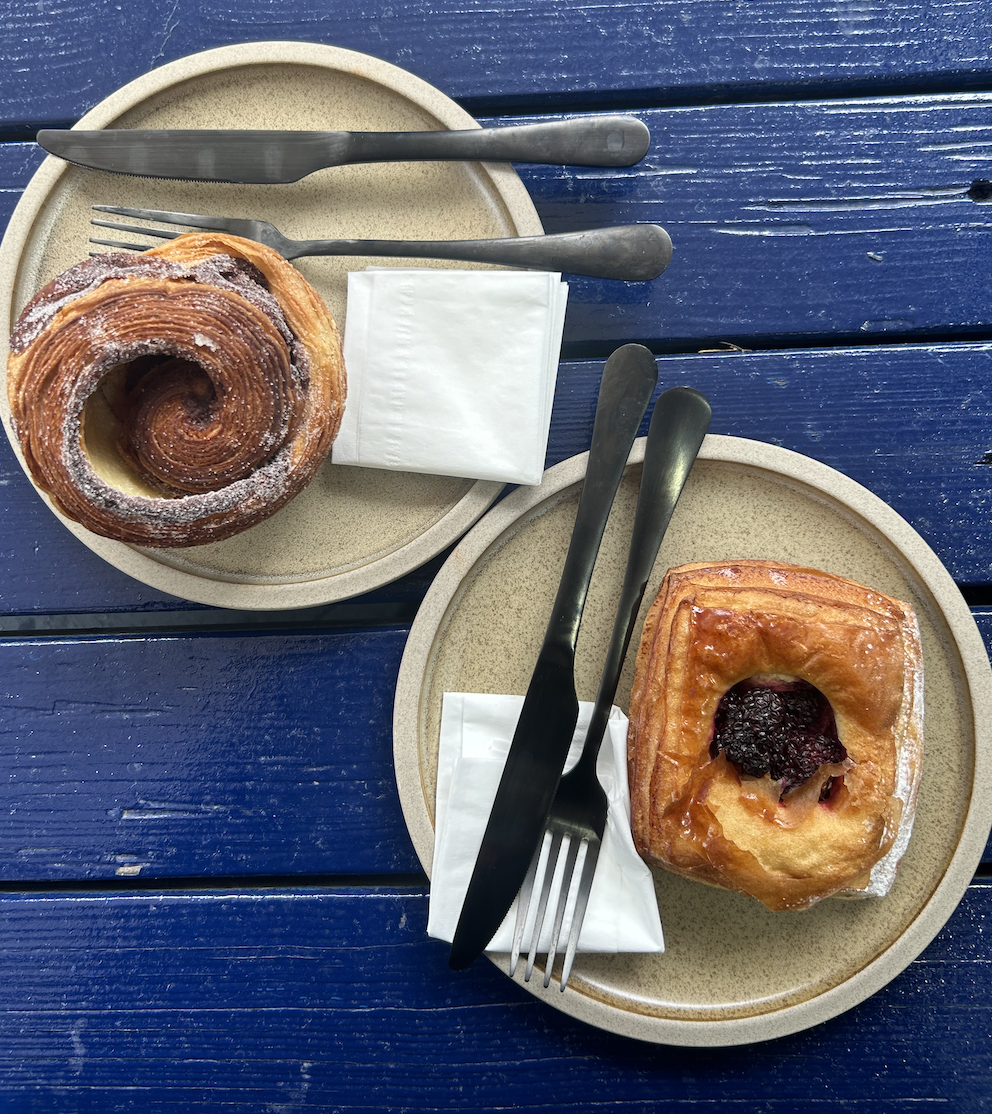
<p>Last weekend, I played the <a href="https://londonfidecongress.com/ealing-rapidplay">Ealing FIDE Rapid Play</a> tournament in West London. The format was 6 rounds, one after another, with a time control of 15 minutes + 5 seconds increment. It was a sunny but chilly day, and the playing venue was conveniently located close to a few stores, coffee shops, as well as one of my favorite bakeries, Gail’s. Things were off to a promising sun as I got to enjoy a coffee and a pastry under the sun. 
<img src="/docs/assets/pictures/bakery.png" alt="Coffee and pastry at a bakery" /></p>

<p>But I did not have high expectations around the outcome of the tournament. I rarely play rapid over the board, so I often feel like classical chess is the only one I care about when it comes to my performance. I can’t help but think about the <a href="https://www.youtube.com/shorts/MVBZu0k2R2g">viral Dubov moment</a> and find that, in a hilarious way, he has a point. Rapid is tricky to play - you can’t go too in depth in a position because you risk getting into inescapable time trouble, but you also can’t rush through your moves because if you make a mistake, your opponent will have time to spot it.</p>

<p>But rapid can also be a lot of fun, especially for more experienced players. You get to trust your gut more, play more based on vibes 😂. And if you land in positions where you’re familiar with the key ideas and plans, you have a great advantage over your opponent.</p>

<h3 id="round-1---️">Round 1 - ⚫️</h3>

<p>I started the tournament facing one of the least desirable opponents to have: a boy born in 2017 🤯. Don’t get me wrong, children are adorable. But also often underrated!</p>

<p>We reached the following position after one of the main lines in the King’s Indian, The Fianchetto Variation:</p>
<div style="position: relative; padding-bottom: 66.67%; height: 0; overflow: hidden;">
  <iframe src="https://lichess.org/study/embed/2fMGxrIa/RontNf9D#22" style="position: absolute; top: 0; left: 0; width: 100%; height: 100%;" frameborder="0">
  </iframe>
</div>

<p>He played very fast until here, indicating that he knew the line. 
(<i>Sidenote, you are not required to write down your moves in rapid, so I didn’t. I had to harvest my short term memory to recollect the games - at least this one was pretty easy because it is well-known territory until here. </i>)</p>

<p>Black is threatening to take on c4, so here the computer is suggesting Nd2 for White. But my opponent went for a wrong turn: he took on b5 and played a3. Black is already in a better position after this move, because it weakens the b3 pawn. And although I didn’t play the most accurate move (which would have been Bf5 according to the computer), I managed to get a winning position within a few moves. (use the arrows below to see the whole game. Also check out <a href="https://lichess.org/developers">this resource</a> if you’re curious how I made this cool lichess embedding happen.)</p>
<div style="position: relative; padding-bottom: 66.67%; height: 0; overflow: hidden;">
  <iframe src="https://lichess.org/study/embed/2fMGxrIa/RontNf9D#25" style="position: absolute; top: 0; left: 0; width: 100%; height: 100%;" frameborder="0">
  </iframe>
</div>

<h3 id="round-2">Round 2</h3>

<p>My game in round 2 made me feel so grateful to be playing chess. I was paired against someone slightly higher rated than me in rapid (1933 vs 1952), but I got the perfect rapid situation out of the opening: we entered a typical Italian Game position, if you ever watch me stream, you know that’s my favourite opening.  And therefore I have a pretty good feel for some of the typical attacking maneuvers. I also made a YouTube video a couple of months ago of another beautiful game I won with this opening.</p>
<div style="position: relative; padding-bottom: 66.67%; height: 0; overflow: hidden;">
  <iframe src="https://lichess.org/study/embed/2fMGxrIa/gE9U5Y5I#19" style="position: absolute; top: 0; left: 0; width: 100%; height: 100%;" frameborder="0">
  </iframe>
</div>
<p>The position evolved in a pretty predictable manner: black pushed d5, took on e4 (White does not mind this), traded light squared bishops (often times White doesn’t mind this either, because the f5 square becomes even more attainable), while White got a typical setup with Nf5, Qf3, and Bishop c1 ready to bolt to h6. And in fact, after black’s blunder, Qe8, see if you can find White’s tactical continuation:</p>
<div style="position: relative; padding-bottom: 66.67%; height: 0; overflow: hidden;">
  <iframe src="https://lichess.org/study/embed/2fMGxrIa/gE9U5Y5I#36" style="position: absolute; top: 0; left: 0; width: 100%; height: 100%;" frameborder="0">
  </iframe>
</div>
<p>Black’s only response after Bh6! is to accept a terrible position, where their king is still weak, they’re a pawn down, their bishop on a7 is out of play despite being on a long diagonal, and the rook on a8 is undeveloped.</p>
<div style="position: relative; padding-bottom: 66.67%; height: 0; overflow: hidden;">
  <iframe src="https://lichess.org/study/embed/2fMGxrIa/gE9U5Y5I#43" style="position: absolute; top: 0; left: 0; width: 100%; height: 100%;" frameborder="0">
  </iframe>
</div>
<p>White’s advantage is long-term; they don’t have to hurry here, they can take time to reach the maximum potential of each piece before striking again. After some very intuitive improving moves, here comes the final blow:</p>
<div style="position: relative; padding-bottom: 66.67%; height: 0; overflow: hidden;">
  <iframe src="https://lichess.org/study/embed/2fMGxrIa/gE9U5Y5I#57" style="position: absolute; top: 0; left: 0; width: 100%; height: 100%;" frameborder="0">
  </iframe>
</div>
<p><br />
I liked this tactic so much, I even made an Instagram reel about it:</p>

<blockquote class="instagram-media" data-instgrm-permalink="https://www.instagram.com/reel/DW7TpY4iCsT/" data-instgrm-captioned="" data-instgrm-version="14" style="max-width:660px; min-width:326px; width:100%;">
</blockquote>
<script async="" src="//www.instagram.com/embed.js"></script>

<p>Yes, yes, I plead guilty to bragging about my wins. But don’t look away just yet, because there isn’t much to brag about in the next game …</p>

<h3 id="round-3---️">Round 3 - ⚫️</h3>

<p>My opponent opened with the Trompowsky, which immediately made me go “Oh, no, I haven’t looked at this line in a while”. But the game got out of known territory quickly, when White decided to go for a quick e4, and then, probably to prevent Nc6 attacking the Queen on d4, gave up their dark squared bishop for the knight on b8:</p>
<div style="position: relative; padding-bottom: 66.67%; height: 0; overflow: hidden;">
  <iframe src="https://lichess.org/study/embed/2fMGxrIa/1U5YgpC8#11" style="position: absolute; top: 0; left: 0; width: 100%; height: 100%;" frameborder="0">
  </iframe>
</div>
<p>When he played this, I did think it was a strange decision. And in fact it is - computer already gives black a -1.0 eval after R takes b8 and Q takes d4. Regardless, things took an even stranger turn that led to an unexpected queens’ trade:</p>
<div style="position: relative; padding-bottom: 66.67%; height: 0; overflow: hidden;">
  <iframe src="https://lichess.org/study/embed/2fMGxrIa/1U5YgpC8#16" style="position: absolute; top: 0; left: 0; width: 100%; height: 100%;" frameborder="0">
  </iframe>
</div>
<p>I thought I should have an edge in the resulting queenless position below, because while both of us have a weak pawn (a5 and d4), I have the bishop pair and faster development. I can also exchange my other isolated pawn, d7, by playing d5, and get my pawn islands count down to 2. Once again, I was right, as the computer evaluates this position as -0.7.</p>
<div style="position: relative; padding-bottom: 66.67%; height: 0; overflow: hidden;">
  <iframe src="https://lichess.org/study/embed/2fMGxrIa/1U5YgpC8#19" style="position: absolute; top: 0; left: 0; width: 100%; height: 100%;" frameborder="0">
  </iframe>
</div>

<p>But things are not so easy. Black needs at least a couple of moves to be able to attack the pawn on a5, while White can immediately hit d4 with Ne2. I therefore understood that I might lose the d4 pawn, but I should have compensation, so I prioritised developing my pieces, and we got to the following position a few moves later:</p>
<div style="position: relative; padding-bottom: 66.67%; height: 0; overflow: hidden;">
  <iframe src="https://lichess.org/study/embed/2fMGxrIa/1U5YgpC8#29" style="position: absolute; top: 0; left: 0; width: 100%; height: 100%;" frameborder="0">
  </iframe>
</div>

<p>Eval? Still -0.5 even though black is a pawn down. Despite liking my position, I unfortunately blew through a lot of my time trying to figure out how to approach it, and my opponent built a 5 minutes advantage on the clock. After a few inaccuracies on my part, white is better if they defend in this position with 21.Rb1, which they did.</p>
<div style="position: relative; padding-bottom: 66.67%; height: 0; overflow: hidden;">
  <iframe src="https://lichess.org/study/embed/2fMGxrIa/1U5YgpC8#40" style="position: absolute; top: 0; left: 0; width: 100%; height: 100%;" frameborder="0">
  </iframe>
</div>

<p>The game lasted 10 more moves from here. Honestly, at the end of this game, I genuinely did not know what I did so wrong. Or rather, where did things start going south. My intuition was right to believe I had good piece activity after the queens trade - yet I couldn’t make it work, got into time troubled, and collapsed. This game might have had a completely different outcome if it would have been a classical one. No excuses, though 😒</p>

<h3 id="round-4">Round 4</h3>

<p>Unfortunately, my memory took a hit after the loss in the previous round, because I was not able to remember this game. This is because unlike with the previous 3 games, which I saved on lichess on the day of the tournament, this game I only tried to reconstruct when writing this article, almost a week later. In fact, I am 100% sure the position below was not the one we had on the board, but an estimation I built to showcase the tactical motif of the game - Nh5 and white wins a piece, and shortly after, the game:</p>
<div style="position: relative; padding-bottom: 66.67%; height: 0; overflow: hidden;">
  <iframe src="https://lichess.org/study/embed/2fMGxrIa/QISvOQg3#2" style="position: absolute; top: 0; left: 0; width: 100%; height: 100%;" frameborder="0">
  </iframe>
</div>

<p>If white’s setup looks vaguely familiar, well done! - you recognized the structure and the thematic Ng3 from the Italian Game, which I also played in game 2. While I was happy I won this round, I didn’t have much hope for a comeback - the guy who beat me in round 3, won again, achieving a perfect 4/4.</p>

<h3 id="round-5---️">Round 5 - ⚫️</h3>
<p>This game was a very nerve-wracking one, because after I got a winning position, my opponent tried very hard to trick me by playing aggressive unexpected moves while I was in time trouble. The stressful thing about this time control - 15m + 5s - is that the increment is so low, it’s very hard to build back time. You’re pretty much moving to survive.</p>

<p>The critical moment of this game happened when White decided to go for the Bishop takes f5 trade:</p>
<div style="position: relative; padding-bottom: 66.67%; height: 0; overflow: hidden;">
  <iframe src="https://lichess.org/study/embed/2fMGxrIa/CDeW4tsi#26" style="position: absolute; top: 0; left: 0; width: 100%; height: 100%;" frameborder="0">
  </iframe>
</div>
<p>This trade introduces a significant imbalance in the position. White gives up their bishop pair, and their best bishop, to damage black’s pawn structure. This is not an unusual idea in this flavour of the French Defense.</p>
<div style="position: relative; padding-bottom: 66.67%; height: 0; overflow: hidden;">
  <iframe src="https://lichess.org/study/embed/2fMGxrIa/CDeW4tsi#30" style="position: absolute; top: 0; left: 0; width: 100%; height: 100%;" frameborder="0">
  </iframe>
</div>

<p>However, black also has a target in white’s position: the pawn on d4. And unfortunately for white, black is better positioned to make the most of the newly formed imbalance:</p>

<div style="position: relative; padding-bottom: 66.67%; height: 0; overflow: hidden;">
  <iframe src="https://lichess.org/study/embed/2fMGxrIa/CDeW4tsi#32" style="position: absolute; top: 0; left: 0; width: 100%; height: 100%;" frameborder="0">
  </iframe>
</div>

<p>In the resulting sequence of moves, white ends up losing an exchange:</p>
<div style="position: relative; padding-bottom: 66.67%; height: 0; overflow: hidden;">
  <iframe src="https://lichess.org/study/embed/2fMGxrIa/CDeW4tsi#38" style="position: absolute; top: 0; left: 0; width: 100%; height: 100%;" frameborder="0">
  </iframe>
</div>

<p>Like I said, my opponent was not ready to give up easily. Keep going through the moves above to see what he tried. Knowing that you’re winning, yet fearing you might screw it up can be a very destabilizing feeling. But in the end I advanced to 4 out of 5 points!</p>

<p>Two boards to the left, on board 1, Ali, who had defeated me in round 3, was playing a crazy bishop vs knight endgame. His board was surrounded by virtually everyone, watching their every move and every second ticking down the clock. Having everyone watch your game can also be destabilizing - but it’s also empowering for some people. Anyway, their game ended in a draw.</p>

<h3 id="round-6">Round 6</h3>

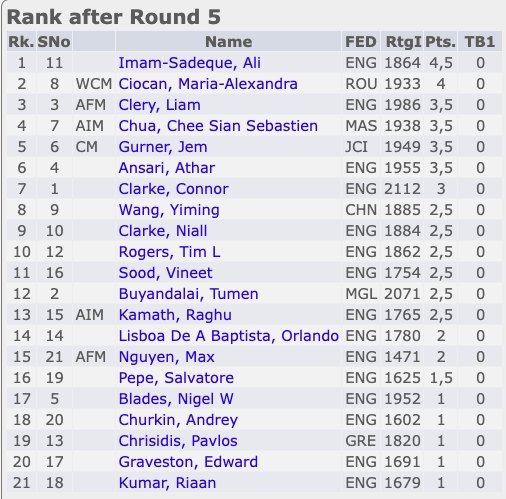
<p>I was now the runner-up, just behind Ali:</p>

<p><img src="/docs/assets/pictures/rankings-after-rd5.png" alt="alt text" /></p>

<p>I knew that a win could potentially make me the winner of the tournament, but I was pretty confident Ali would bring it home in the last game. Maybe I just didn’t want to get my hopes up.</p>

<p>I decided to play fast and not take huge risks. I didn’t want to do something foolish or risky just because I really needed a win. But the game ended surprisingly abruptly:</p>
<div style="position: relative; padding-bottom: 66.67%; height: 0; overflow: hidden;">
  <iframe src="https://lichess.org/study/embed/2fMGxrIa/aXWRYQLk#34" style="position: absolute; top: 0; left: 0; width: 100%; height: 100%;" frameborder="0">
  </iframe>
</div>

<p>Here my opponent, after a 6 minute think (which is huge in rapid!), offered me a queens trade. White can win the pawn on e7 after the trade, so I figured he was hoping the resulting position would nonetheless be a draw thanks to the rook infiltrating. I didn’t think I had much choice anyway, so I went for it. But black took a wrong turn, with R takes e7:</p>

<div style="position: relative; padding-bottom: 66.67%; height: 0; overflow: hidden;">
  <iframe src="https://lichess.org/study/embed/2fMGxrIa/aXWRYQLk#40" style="position: absolute; top: 0; left: 0; width: 100%; height: 100%;" frameborder="0">
  </iframe>
</div>
<p>This is wrong because the white bishop can retreat and defend white’s queenside pawns, after which white has a great position, even with the loss of the f2 pawn:</p>
<div style="position: relative; padding-bottom: 66.67%; height: 0; overflow: hidden;">
  <iframe src="https://lichess.org/study/embed/2fMGxrIa/aXWRYQLk#47" style="position: absolute; top: 0; left: 0; width: 100%; height: 100%;" frameborder="0">
  </iframe>
</div>
<p>Instead of R takes e7, computer is a fan of the intermediary g5 push for black, which forces the white bishop to retreat to g3, and then black gets excellent activity with the rook on e2. We shook hands a few moves later. I couldn’t believe it!</p>

<p>I turned to my right to look at Ali’s game, on board 1. Their position was crazy - Ali with the black pieces, was a couple of pawns up. Additionally, White had played a very unorthodox game: they had a king on e2, double pawns on the d file, and a very disorganized position. But I couldn’t be happier - that meant chaos! My heart was racing watching their game faster than during my own game. All of a sudden, White can win Ali’s rook. A full rook in a still chaotic position.</p>

<p>But he goes for a repetition! I nearly jump out of my chair. “TAKE HIS ROOK !!!” is all I want to yell. 
White changes his mind. Black didn’t have a way to escape the checks, so after a repetition, White is now a rook up.</p>

<p>But this now makes me even more nervous - I can see with my own eyes I have a real chance - but what if White throws it away 😰</p>

<p>Shortly after winning the rook, White sacrifices a knight. WHYYYYYYY ?????? I want to scream once again. Why risk it when you’re a rook up ???</p>

<p>But then I see it. Checkmate in 3. It’s not easy. White has to give a check, then do a preparatory move that basically threatens unstoppable mate. Will he see it ??? 
HE SEES IT !!!!!</p>

<p>I get up, quickly turning my huge grin away. No need to let Ali see me happy at his expense. He played such a good tournament.</p>
<h2 id="i-won-a-rapid-tournament-">I WON A RAPID TOURNAMENT !!!</h2>
<p><img src="/docs/assets/pictures/250D6202-90AF-40B2-B85C-32E084D16E80.jpeg" alt="Out of context picture from Morocco - I did not take pics on the day of the tournament 🥲" />
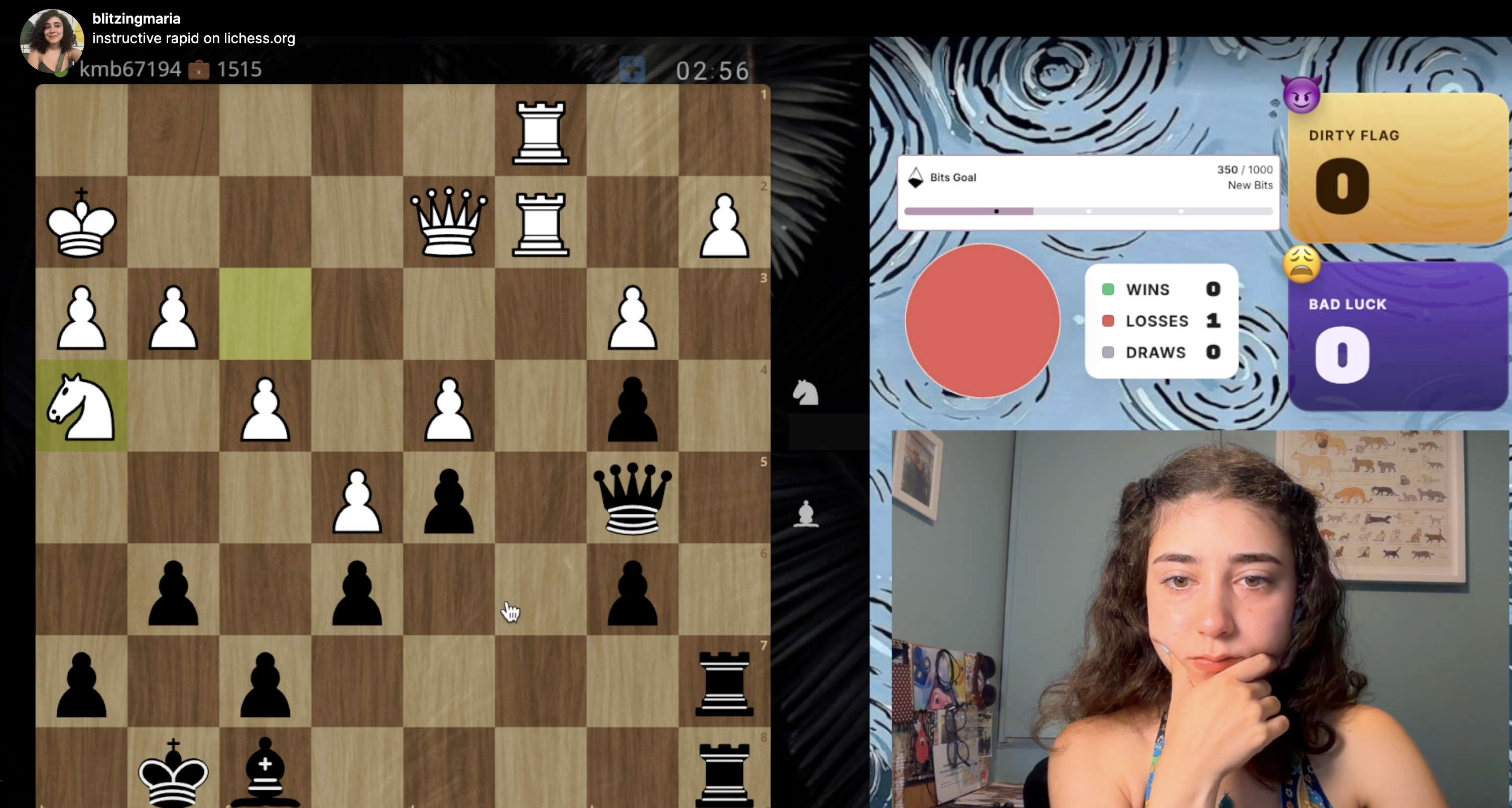
<i> Out of context picture from Morocco - I did not take pics on the day of the tournament 🥲</i></p>]]></content><author><name>Maria Ciocan</name></author><category term="Other" /><summary type="html"><![CDATA[We are all overly familiar with all the heartbreak and frustration chess can incur in even the most calm &amp; collected players 😅. But today I want to boast about the satisfaction of winning a game with a fiery tactic or a skillful strategic play, about the pride of seeing your name at the top of the leaderboard …]]></summary></entry><entry><title type="html">My 2026 in books 📚✨🫶🏻</title><link href="https://mariaciocan.github.io/2026/01/01/my-2026-in-books.html" rel="alternate" type="text/html" title="My 2026 in books 📚✨🫶🏻" /><published>2026-01-01T00:00:00+00:00</published><updated>2026-01-01T00:00:00+00:00</updated><id>https://mariaciocan.github.io/2026/01/01/my-2026-in-books</id><content type="html" xml:base="https://mariaciocan.github.io/2026/01/01/my-2026-in-books.html"><![CDATA[<p>A running log of every book I read in 2026, and how highly I rate them, in the order I finished them. You can also find me on <a href="https://www.goodreads.com/user/show/49449364-maria">Goodreads</a> if you’d like to follow along there too!</p>

<p><em>Last updated: October 6, 2026</em></p>

<hr />

<div class="book-entry">
  
    <div class="book-cover">
      <img src="/docs/assets/pictures/book-covers/my-husband.png" alt="My Husband book cover" />
    </div>
  
  <div class="book-info">
    <h3 class="book-title">My Husband</h3>
    <p class="book-author">by Maud Ventura</p>


<span class="star-rating" aria-label="Rating: 3.5 out of 5 stars"><span class="star full" aria-hidden="true">★</span><span class="star full" aria-hidden="true">★</span><span class="star full" aria-hidden="true">★</span><span class="star half" aria-hidden="true">★</span><span class="star empty" aria-hidden="true">★</span></span>

    <p class="book-description">A sharply-written, unsettling portrait of obsessive love. The narrator is deeply devoted to her husband — perhaps too devoted. Ventura peels back the polished surface of a seemingly perfect marriage to expose the anxiety and control that lurk beneath. It reads quickly and leaves you with an uncomfortable feeling that lingers.</p>
  </div>
</div>

<div class="book-entry">
  
    <div class="book-cover">
      <img src="/docs/assets/pictures/book-covers/never-let-me-go.png" alt="Never Let Me Go book cover" />
    </div>
  
  <div class="book-info">
    <h3 class="book-title">Never Let Me Go</h3>
    <p class="book-author">by Kazuo Ishiguro</p>


<span class="star-rating" aria-label="Rating: 3.5 out of 5 stars"><span class="star full" aria-hidden="true">★</span><span class="star full" aria-hidden="true">★</span><span class="star full" aria-hidden="true">★</span><span class="star half" aria-hidden="true">★</span><span class="star empty" aria-hidden="true">★</span></span>

    <p class="book-description">A quietly devastating novel told through the hazy memories of Kathy, who grew up at an idyllic English boarding school. Ishiguro builds dread at a slow, deliberate pace — you sense long before the characters do that something is deeply wrong. The restraint in the writing makes the emotional punch all the more powerful.</p>
  </div>
</div>

<div class="book-entry">
  
    <div class="book-cover">
      <img src="/docs/assets/pictures/book-covers/doppelganger.png" alt="Doppelganger book cover" />
    </div>
  
  <div class="book-info">
    <h3 class="book-title">Doppelganger</h3>
    <p class="book-author">by Naomi Klein</p>


<span class="star-rating" aria-label="Rating: 4.5 out of 5 stars"><span class="star full" aria-hidden="true">★</span><span class="star full" aria-hidden="true">★</span><span class="star full" aria-hidden="true">★</span><span class="star full" aria-hidden="true">★</span><span class="star half" aria-hidden="true">★</span></span>

    <p class="book-description">A fascinating blend of memoir and political essay, born from Klein's unsettling experience of being repeatedly mistaken online for Naomi Wolf. She uses that personal irritation as a springboard to examine misinformation, fractured identities, and the way the internet creates distorted mirror versions of reality. It is her most intimate and experimental work — sharp, strange, and uncomfortably relevant.</p>
  </div>
</div>

<div class="book-entry">
  
    <div class="book-cover">
      <img src="/docs/assets/pictures/book-covers/the-bluest-eye.png" alt="The Bluest Eye book cover" />
    </div>
  
  <div class="book-info">
    <h3 class="book-title">The Bluest Eye</h3>
    <p class="book-author">by Toni Morrison</p>


<span class="star-rating" aria-label="Rating: 5.0 out of 5 stars"><span class="star full" aria-hidden="true">★</span><span class="star full" aria-hidden="true">★</span><span class="star full" aria-hidden="true">★</span><span class="star full" aria-hidden="true">★</span><span class="star full" aria-hidden="true">★</span></span>

    <p class="book-description">Morrison's debut novel, and it is devastating. Set in 1940s Ohio, it follows Pecola Breedlove, a young Black girl who wishes for blue eyes — believing they will make her beautiful, lovable, accepted. Morrison writes with lyrical precision about racism, trauma, and the violence of internalized self-hatred. It is a brutal, beautiful, essential book — the kind that stays with you long after the last page.</p>
  </div>
</div>

<div class="book-entry">
  
    <div class="book-cover">
      <img src="/docs/assets/pictures/book-covers/sunt-o-baba-comunista.png" alt="Sunt o baba comunista book cover" />
    </div>
  
  <div class="book-info">
    <h3 class="book-title">Sunt o baba comunista</h3>
    <p class="book-author">by Dan Lungu</p>


<span class="star-rating" aria-label="Rating: 4.5 out of 5 stars"><span class="star full" aria-hidden="true">★</span><span class="star full" aria-hidden="true">★</span><span class="star full" aria-hidden="true">★</span><span class="star full" aria-hidden="true">★</span><span class="star half" aria-hidden="true">★</span></span>

    <p class="book-description">A warmly satirical Romanian novel about Emilia, an elderly woman who misses communism — not out of ideology, but out of nostalgia for stability, routine, and a world she understood. Lungu handles her perspective with humour and genuine empathy, never mocking her. The result is a quietly profound meditation on memory, identity, and what we lose — and distort — when the world we knew disappears.</p>
  </div>
</div>

<div class="book-entry">
  
    <div class="book-cover">
      <img src="/docs/assets/pictures/book-covers/lying-on-the-couch.png" alt="Lying on the Couch book cover" />
    </div>
  
  <div class="book-info">
    <h3 class="book-title">Lying on the Couch</h3>
    <p class="book-author">by Irvin D. Yalom</p>


<span class="star-rating" aria-label="Rating: 3.5 out of 5 stars"><span class="star full" aria-hidden="true">★</span><span class="star full" aria-hidden="true">★</span><span class="star full" aria-hidden="true">★</span><span class="star half" aria-hidden="true">★</span><span class="star empty" aria-hidden="true">★</span></span>

    <p class="book-description">A novel that pulls back the curtain on the therapy room, following two therapists whose approaches to honesty, boundaries, and the patient relationship could not be more different. Yalom, himself a psychiatrist, brings real authenticity to the ethical dilemmas at play. From blind fury to grief and acceptance, this book showcases the complexity of human minds, as well as the importance of introspection and self-reflection.</p>
  </div>
</div>

<div class="book-entry">
  
    <div class="book-cover">
      <img src="/docs/assets/pictures/book-covers/best-offer-wins.png" alt="Best Offer Wins book cover" />
    </div>
  
  <div class="book-info">
    <h3 class="book-title">Best Offer Wins</h3>
    <p class="book-author">by Marissa Kashino</p>


<span class="star-rating" aria-label="Rating: 3.0 out of 5 stars"><span class="star full" aria-hidden="true">★</span><span class="star full" aria-hidden="true">★</span><span class="star full" aria-hidden="true">★</span><span class="star empty" aria-hidden="true">★</span><span class="star empty" aria-hidden="true">★</span></span>

    <p class="book-description">A darkly comic thriller about Margo, a woman who has lost eleven consecutive house bidding wars in Washington D.C. and is rapidly losing her grip. Her hunt for an off-market dream home tips into obsession — she stalks the sellers, infiltrates their social circle, and spirals into increasingly reckless decisions. It is a fun, fast read that skewers housing market madness, though it leans more satirical than truly chilling.</p>
  </div>
</div>

<div class="book-entry">
  
    <div class="book-cover">
      <img src="/docs/assets/pictures/book-covers/flesh.png" alt="Flesh book cover" />
    </div>
  
  <div class="book-info">
    <h3 class="book-title">Flesh</h3>
    <p class="book-author">by David Szalay</p>


<span class="star-rating" aria-label="Rating: 4.0 out of 5 stars"><span class="star full" aria-hidden="true">★</span><span class="star full" aria-hidden="true">★</span><span class="star full" aria-hidden="true">★</span><span class="star full" aria-hidden="true">★</span><span class="star empty" aria-hidden="true">★</span></span>

    <p class="book-description">Szalay takes us on the tumultuous journey that is the life of Ivan, the main character. Ivan goes though troubling experiences which invite conversations and reflection on trauma, repression, and masculinity. The author's dettached and punctual writing style is a mirror for his protagonist's inner world - we often know what happens to Ivan, but don't often feel like we truly know him, like we understand his sufferings and motivations. </p>
  </div>
</div>

<div class="book-entry">
  
    <div class="book-cover">
      <img src="/docs/assets/pictures/book-covers/only-alive-on-sundays.png" alt="Only alive on Sundays book cover" />
    </div>
  
  <div class="book-info">
    <h3 class="book-title">Only alive on Sundays</h3>
    <p class="book-author">by Kim Rashidi</p>


<span class="star-rating" aria-label="Rating: 2.0 out of 5 stars"><span class="star full" aria-hidden="true">★</span><span class="star full" aria-hidden="true">★</span><span class="star empty" aria-hidden="true">★</span><span class="star empty" aria-hidden="true">★</span><span class="star empty" aria-hidden="true">★</span></span>

    <p class="book-description">A whimsical book about a girl, Mila, learning to know herself and to stop living her life feeling like an outsider looking in. The author's style is slow-paced, with beautiful word plays and metaphors, trying to instill a sense of tranquility about life into her readers. Mila looks for signs from the universe, and from her own heart, to get over one man, and start anew with another. While her journey is strange and sometimes circuitous, the conclusion brings her closer to herself. </p>
  </div>
</div>

<div class="book-entry">
  
    <div class="book-cover">
      <img src="/docs/assets/pictures/book-covers/Katabasis.jpg" alt="Katabasis book cover" />
    </div>
  
  <div class="book-info">
    <h3 class="book-title">Katabasis</h3>
    <p class="book-author">by R.F. Kuang</p>


<span class="star-rating" aria-label="Rating: 3.0 out of 5 stars"><span class="star full" aria-hidden="true">★</span><span class="star full" aria-hidden="true">★</span><span class="star full" aria-hidden="true">★</span><span class="star empty" aria-hidden="true">★</span><span class="star empty" aria-hidden="true">★</span></span>

    <p class="book-description">A dark-academia descent into the underworld where two rival scholars must navigate myth, ambition, and grief to retrieve a soul from the dead. Kuang blends classical references with sharp character tension; while the premise is compelling, the pacing occasionally drags, making this a solid but uneven read.</p>
  </div>
</div>

<div class="book-entry">
  
    <div class="book-cover">
      <img src="/docs/assets/pictures/book-covers/my-name-is-emilia-del-valle.png" alt="My Name Is Emilia del Valle book cover" />
    </div>
  
  <div class="book-info">
    <h3 class="book-title">My Name Is Emilia del Valle</h3>
    <p class="book-author">by Isabel Allende</p>


<span class="star-rating" aria-label="Rating: 4.5 out of 5 stars"><span class="star full" aria-hidden="true">★</span><span class="star full" aria-hidden="true">★</span><span class="star full" aria-hidden="true">★</span><span class="star full" aria-hidden="true">★</span><span class="star half" aria-hidden="true">★</span></span>

    <p class="book-description">A richly told historical novel about Emilia del Valle, a determined young writer who defies social expectations to chase truth and independence. Allende blends family history, political upheaval, and emotional depth into a compelling coming-of-age story that makes you want to get on the next flight to Chile.</p>
  </div>
</div>

<div class="book-entry">
  
    <div class="book-cover">
      <img src="/docs/assets/pictures/book-covers/misunderstanding-in-moscow.jpeg" alt="Misunderstanding in Moscow book cover" />
    </div>
  
  <div class="book-info">
    <h3 class="book-title">Misunderstanding in Moscow</h3>
    <p class="book-author">by Simone de Beauvoir</p>


<span class="star-rating" aria-label="Rating: 4.5 out of 5 stars"><span class="star full" aria-hidden="true">★</span><span class="star full" aria-hidden="true">★</span><span class="star full" aria-hidden="true">★</span><span class="star full" aria-hidden="true">★</span><span class="star half" aria-hidden="true">★</span></span>

    <p class="book-description">A short but piercing novella about a long-married couple — André and Nicole — who travel to Moscow and find that the distance between them has quietly grown, turning their connection sometimes unrecognizable. De Beauvoir strips the story down to its emotional core, writing about aging, regret, and the slow erosion of intimacy.</p>
  </div>
</div>

<div class="book-entry">
  
    <div class="book-cover">
      <img src="/docs/assets/pictures/book-covers/the-lost-daughter.jpg" alt="The Lost Daughter book cover" />
    </div>
  
  <div class="book-info">
    <h3 class="book-title">The Lost Daughter</h3>
    <p class="book-author">by Elena Ferrante</p>


<span class="star-rating" aria-label="Rating: 5.0 out of 5 stars"><span class="star full" aria-hidden="true">★</span><span class="star full" aria-hidden="true">★</span><span class="star full" aria-hidden="true">★</span><span class="star full" aria-hidden="true">★</span><span class="star full" aria-hidden="true">★</span></span>

    <p class="book-description">While on holiday by the sea, Leda becomes fascinated by a young mother and her daughter. Their presence brings her own complicated memories of motherhood to the surface, in a sharp, intimate novel about love, resentment, and the parts of ourselves we try to leave behind. It is a strange and unsettling book, but Ferrante's incisive writing makes for a dive into womanhood and motherhood that is not sugarcoated to make it more palatable. </p>
  </div>
</div>

<div class="book-entry">
  
    <div class="book-cover">
      <img src="/docs/assets/pictures/book-covers/death-row.jpeg" alt="Death Row book cover" />
    </div>
  
  <div class="book-info">
    <h3 class="book-title">Death Row</h3>
    <p class="book-author">by Freida McFadden</p>


<span class="star-rating" aria-label="Rating: 2.0 out of 5 stars"><span class="star full" aria-hidden="true">★</span><span class="star full" aria-hidden="true">★</span><span class="star empty" aria-hidden="true">★</span><span class="star empty" aria-hidden="true">★</span><span class="star empty" aria-hidden="true">★</span></span>

    <p class="book-description">Talia Kemper is on death row for the murder of her husband, though she insists she is innocent. As her execution approaches, she begins to question what is real, setting off a psychological mystery about guilt, memory, and the truth behind her conviction. I have been wanting to read one of Freida's books in a while, given her incredible popularity on the internet. However, I found the plot twist of this book predictable and the writing quite basic. More specifically about the writing, it felt like things were repeated or over-explained, even though the book is quite short.</p>
  </div>
</div>]]></content><author><name>Maria Ciocan</name></author><category term="Other" /><summary type="html"><![CDATA[A running log of every book I read in 2026, and how highly I rate them, in the order I finished them. You can also find me on Goodreads if you’d like to follow along there too!]]></summary></entry><entry><title type="html">Can you keep your cool under fire?</title><link href="https://mariaciocan.github.io/2025/01/12/keep-your-cool-under-fire.html" rel="alternate" type="text/html" title="Can you keep your cool under fire?" /><published>2025-01-12T00:00:00+00:00</published><updated>2025-01-12T00:00:00+00:00</updated><id>https://mariaciocan.github.io/2025/01/12/keep-your-cool-under-fire</id><content type="html" xml:base="https://mariaciocan.github.io/2025/01/12/keep-your-cool-under-fire.html"><![CDATA[<p><span style="font-size: smaller;"><em>A closer look at a London League game where my opponent overplayed his hand and put my nerves to the test.</em></span></p>

<p>It’s October and cities around the world are embracing the autumn looks, trading in
bright colors for shades of burnt orange and crimson red. For me, October also brings
the start of a new season of the London League. 
The London Chess League is an annual team competition, split into divisions on a promotion-demotion system. This is
my second year participating, and my late evening chess matches have
become one of the things I am looking forward to every time.</p>

<p>So, two weeks ago somewhere in rainy London, I was headed for my first match of the
season, playing board 4 out of 8 in my team. I didn’t know what colour I was going to
play or anything about my opponent. After participating in many FIDE-rated
tournaments, such as World &amp; European Youth Championships, I have grown
accustomed to knowing my opponent’s rating before the match. Often times I would revise my openings before the game, trying to be well-prepared against as many systems as possible, or maybe coming up with a surprise 
opening chance to confuse my opponent. In the London League, I just sit down and play, which makes the experience different, and I am still exploring the full implications of those differences. 
Anyway, my tube was delayed and I arrived at the venue 15 minutes late, starting with 60 minutes on
the clock, so I quickly developed into a classic French defense setup. Following the
typical pawn breakthroughs c5 and d4, I found myself in the following middlegame:</p>

<p><img src="/docs/assets/pictures/position1.png" alt="Alt text" /></p>

<p>I was mildly discontent with my position as black. My light-squared bishop was very
limited and I had a weakness on e6.
The lichess.org engine evaluates this position as +0.6 for white, suggesting meticulous
planning to increase the pressure. The setup for white preferred by Stockfish is
highlighted on the board. Even after browsing through the best lines, I am still unclear
on precisely how white can prove their advantage. But that’s not exactly what I felt at
the board: then, I worried that white might try to break through my kingside, with a well-
timed f4-f5 or h4-h5.
Yet, I was happy I had a solid lead on the clock: 20 minutes against 10. There was little
chance of flagging, thanks to the 15 seconds increment. But I know from experience
that when you see the seconds scrolling down the digital clock, you feel stressed and
are way more likely to blunder. So, I was hoping the time pressure would make my
opponent take a wrong turn. Plus, I felt I had two easy moves ahead of me: Rb8 and
Bd7, simply improving those pieces.
My opponent took me by surprise:</p>

<p><img src="/docs/assets/pictures/position2.png" alt="Alt text" /></p>

<p>White pushed f4-f5, a fairly aggressive move that threatens to take on g6. A move
before (see diagram above), I had thought about white pushing f5. I felt confidently
about responding with e5 so I dismissed that move for white.
But seeing it played on the board forced me to explore the f takes g6 scenario:</p>

<p><img src="/docs/assets/pictures/position3.png" alt="alt text" /></p>

<p>The cool thing about black’s e5 is that it doesn’t just attack the knight, but also threatens
a fork on e4 next move. Basically, white loses a minor one way or another. So instead of
Can you keep your cool under fire? 4
salvaging the knight, white captures on g6 and fights to establish compensation for the
lost piece through the pressure on black’s kingside.
At this point, my opponent had used up most of his time calculating and I was feeling
uneasy. I grabbed the knight on d4 thinking that from this point, I only need to prove his
attack isn’t working and I keep the extra material. My opponent took two pawns for the
knight, but I thought that in the event of a queens’ trade, having an extra minor piece
would allow me to capture those pawns back.
After he recaptured on d4 and I retreated the bishop, I realised white had much more
dynamic play than I had anticipated:</p>

<p><img src="/docs/assets/pictures/position5.png" alt="alt text" /></p>

<p>Black should not forget that g takes h7 is just lurking in the background. The pressure of
white’s heavy pieces on the open files, combined with the strength of the bishop pair,
makes up much more than a pawn.
In fact, just one move later, I made a critical mistake, responding to Bh6 with Bg4:</p>

<p><img src="/docs/assets/pictures/position6.png" alt="alt text" /></p>

<p>I was now down to 30 seconds, just like my opponent, and I felt that the game was
about to be decided momentarily. My go-to next move was taking the rook on f3. But I
was missing something huge in this position: that black should absolutely not capture
the rook on f3 next move.
With no one left to cover e6, the white queen scoops in to deliver a cute checkmate:</p>

<p><img src="/docs/assets/pictures/position7.png" alt="alt text" /></p>

<p>The best move for white after Bg4 is the quiet and efficient h3:</p>

<p><img src="/docs/assets/pictures/position8.png" alt="alt text" /></p>

<p>Since Bishop takes f3 leads to checkmate, black has to retreat. White’s pressure simply
resumes, the first black piece to fall probably being the rook on f8.
But instead of h3, the last thing that you want to see when you’re down to thirty seconds
happened: a queen sacrifice!
My suspicious frowned turned into a worried one as I found my opponent’s fantastic
checkmate idea:</p>

<p><img src="/docs/assets/pictures/position9.png" alt="alt text" /></p>

<p>I started calculating Q takes g3 instead, hoping to take on e2 after white takes on g3
and simplify to an endgame. But white has the powerful Q takes e7, and the threat of
Qg7 checkmate is crushing.
The clock was now close to ten seconds, and I reconsidered the B takes e2
continuation. It’s frustrating to see a hanging queen and be unable to take it. That’s
when I finally found it:</p>

<p><img src="/docs/assets/pictures/position10.png" alt="alt text" /></p>

<p>King to f7! In my earlier calculation, I had missed the king’s escape to f7 and then e6 (if
it wasn’t for e6, white would have Bg6 checkmate). But king to f7 puts an end to white’s
mating net and even though black’s position is completely uncoordinated, my material
advantage is just too big. Since I’m a queen up, I can offer back part of my material to
cool things down, and still be up afterwards. As the thought was forming in my head, my
hand quickly pushed the king to f7.
Relief took over my body and the game didn’t last much longer. Below is the final
position:</p>

<p><img src="/docs/assets/pictures/position11.png" alt="alt text" /></p>

<p>We shook hands and I headed home feeling happy.</p>

<p>When analyzing your own games, it’s important to keep in mind that lines always feel
more convincing when they are coming with an evaluation bar on the side of the board.
When one has to play defensively, it is not unlikely for a player to overestimate the
attacking prospects or miss an opportunity to switch to offense. Those are things that an
engine wouldn’t miss. One exercise that I find useful is playing moves for my opponent,
and see how the engine refutes the same lines I was worried about in the game. It’s
important to translate the eval score to your own understanding of the game, and also
know when to cut yourself some slack.</p>

<p>Thanks for making it to the end of the analysis, and let me know in the comments how
you deal with your opponents’ blunt attacks.</p>]]></content><author><name>Maria Ciocan</name></author><category term="Other" /><summary type="html"><![CDATA[A closer look at a London League game where my opponent overplayed his hand and put my nerves to the test.]]></summary></entry></feed>