A weekend of chess: 4NCL starts again
It’s autumn. For some, this means school is starting. For others, the summer of internships or vacationing is over, and it’s time to join a grad scheme or update their CV. For me, autumn means over-the-board chess is back! (Isn’t it funny, by the way, how much the Internet has shaped chess culture? Back in the day, over-the-board chess was just chess! Amazing!)
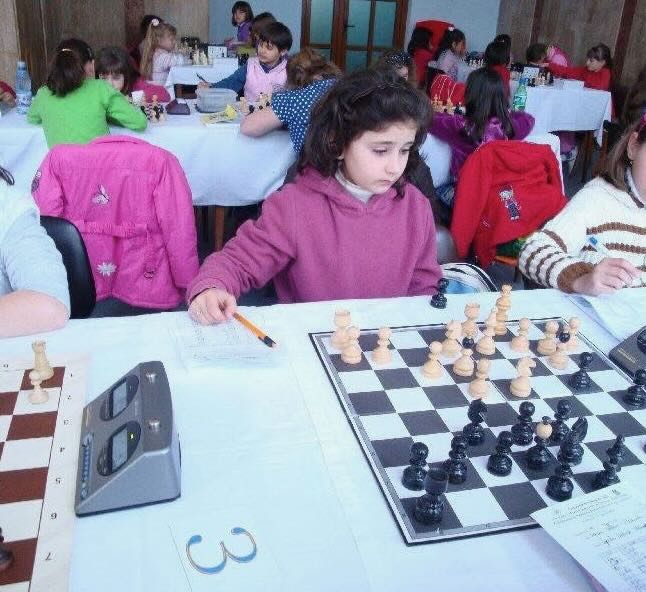
When I was a junior, the busiest chess moment of the year was the summer, since going to tournaments in the rest of the year meant missing school. So the summer break was the perfect opportunity to go away for a week and spend 3 to 6 hours in some hopefully air-conditioned-but-most-likely-not room playing chess. I started playing chess at 7 years old, and there was never a year I didn’t play at least one tournament over the summer until I turned 18.
Nowadays, I have the opposite schedule. The London Chess League and the UK’s Four Nations Chess League span the months of October through May to form what in my life represents the ✨chess season✨. Another indicator that the chess season is restarting in my life is that I’ve finally posted a new game analysis on YouTube. And bonus, it’s in the King’s Indian 😍. It blends some instructive strategical ideas with some unhinged ones that come up in a time scramble.

The Four Nations Chess League is a team competition with five divisions. There is a promotion and relegation system between divisions, with Division One being the most competitive. You can think of its format as similar to the Olympiad, but with clubs instead of countries. Teams position their eight players according to rating-gap rules, and the line-ups become public two hours before the match starts. The players alternate colours: board one of one team plays White, board two plays Black, and so on. Each player’s result counts towards the team’s total, and the team that scores the most points across all games wins the match.
One quirky thing about the 4NCL is the way it’s organized. Most classical chess tournaments take up five to nine days all at once. Instead, the 4NCL spreads eleven rounds across the season, with two rounds on a weekend every few weeks. One game on Saturday, one on Sunday, and see you next time!
Watch this reel on Instagram
At first, I was skeptical about this format. In terms of effort, you end up traveling back and forth much more than in a traditional system. I also worried this would make it hard to get into a rhythm. But over the years (this is my fourth year playing the 4NCL!), I came to appreciate it.
Firstly, it is much more inclusive. Not everyone has the time and budget to book a week away from work for chess and pay for a hotel for a whole week. People can come for the weekend and choose not to play the whole thing. Since teams usually have more players in the squad than the eight they need for a day’s match, they can rotate players so everyone can choose how many weekends to attend.
Secondly, what I saw as a downside — not having time to get into a rhythm — can also be a plus: if you have a rocky start or a frustrating loss, you can go home, relax, train some more, and avoid ruining the rest of your games because of bad form.
Thirdly, this way of organizing shows awareness of the realities of being a strong non-professional chess player. Even as a titled player, you cannot reliably make a living from playing alone. Given the limited funding in competitive chess in general, it would be unfair to force people to drop their other commitments, and equally unfair to force them to miss out on one of the UK’s most competitive tournaments.
Another quirky thing about the 4NCL, and about team competitions in general, is that the way you go from one opponent to the next feels completely different from an open tournament. In an open, if you win, you climb towards the top and thus face stronger and stronger opponents. If you start losing, you usually begin facing weaker and weaker opponents as well. But at the 4NCL, all teams face each other eventually. That basically means you might play terribly on a Saturday and then find out you’re facing a GM on Sunday. (This has happened to me: I went home with nil out of two, yikes.) Another thing that happened to me last year in Division One: despite struggling through the games and scoring 2.5/11 (which was decent, all things considered), all my opponents had a rating over 2000, and only two of them were under 2100.
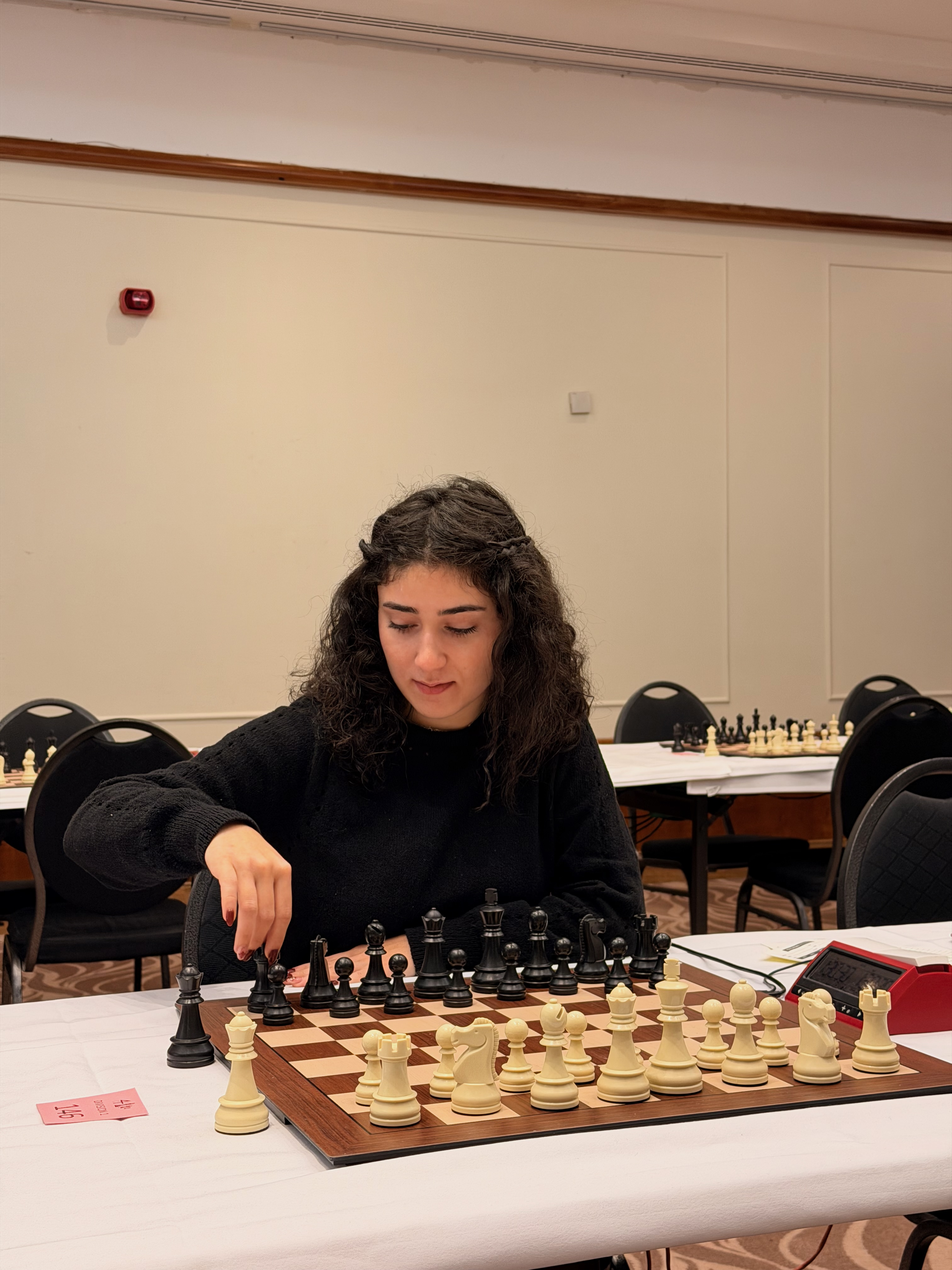
Last weekend, I played in Division Two. And although it’s not as intense as Division One, I actually welcome the opportunity to win more. Both my opponents last weekend were around 2000 FIDE, and since my current rating is 2010, that makes it very achievable for me to win and grow my rating. But this also adds pressure. (Pressure from whom? From myself, of course. If you watch me on Twitch, you know I have no chill when it comes to chess.) Last year, when most of my games were against titled players, losing sucked less because it was the expected result. And even though I had a couple of devastating throwaways, I couldn’t be too hard on myself. This year, winning is much more the expected result if I want to approach the 2100 milestone.
Game one ♟️
I started this game in a really bad mood. I had planned to make it to the venue two hours before the game was supposed to start, but multiple trains from London towards the North-West were cancelled at the last moment. So I made it 45 minutes late to the game, with no time to catch my breath or check into my hotel room after a stressful re-scheduling of the itinerary. The time control at 4NCL is 90 minutes plus a 30-second increment, with an extra 30 minutes after move 40. So starting the game with 50 minutes left didn’t mean I couldn’t still win, but it can prove to be a huge disadvantage if the game is complex from early on. During the game, I knew I needed to try to close the gap on the clock between me and my opponent, but I just couldn’t. Not having played classical in five months, feeling tired and annoyed, I just couldn’t feel confident enough to talk myself into moving faster.
The first critical moment of the game came here. Use the arrows or the “autoplay” button below to see the sequence I’m speaking about. After trades on d5, I thought the position was around equal, and I was looking for some quick, solid moves I could play fast. But my opponent surprised me by recapturing with the bishop, which immediately felt off. After a quick Na4 and his response Nd7, I felt I had taken over the initiative.
Chess sequence: 19... d5 20. exd5 Bxd5 21. Na4 Nd7
Chess pieces by Cburnett, CC BY-SA 3.0
But I had 6 minutes left and 16 moves to play until the extra time. I burned through the remainder of my time calculating B takes a6, and by the time I put it on the board, I had 2 minutes left. When I finally played it, to be honest, I did it out of the sunk-cost fallacy as well. I didn’t have enough time to convince myself it was working (and it wasn’t), but I’d already spent so long calculating it that I felt I might as well try it. My opponent was trying to play fast, even though he had time on the clock. A common strategy is to stop the player in time trouble from thinking on your time, force them to make a mistake, and then spend time finding the punishment. So he didn’t find the right way to punish my overly enthusiastic bishop sacrifice and… I’m winning.
Chess sequence: 22. Bxa6 bxa6 23. Rxd5 exd5 24. Rxe7
Chess pieces by Cburnett, CC BY-SA 3.0
I feel I’m winning, but I know it’s slippery in time trouble. And even though I’m better, I’m much more stressed than before. Now I have something to ruin: a position to beat myself up for destroying. Which, spoiler alert, is exactly what happened.
I grab a bunch of pawns, but I miss an opportunity to simplify, thinking I still have time later on. I’m trying to keep up the pressure, but the truth is, instead of looking for wins, my mind is bracing for jump-scare comebacks from my opponent to spawn on the board at any moment.
I make my first blunder. It’s a very silly blunder—for some reason, I just forgot that he can take twice on c3.
Chess sequence: 28... Rbc8 29. Bc3 Rxc3 30. Nxc3 Rxc3 31. Qd4 Rc5
Chess pieces by Cburnett, CC BY-SA 3.0
I was trying to keep a straight face while he was considering taking the two pieces, half-praying that he would be scared the bishop move was actually a genius sacrifice. He went for it, of course, but the position was still better for me! I knew I still had some chances to at least draw, so I tried to push the screams of “YOU F*CKED IT!!!” out of my mind. But I felt destabilized. And when Qb4 came, I started panicking. The seconds were ticking down, and I had neither the time nor the clarity to see if the two knight checks he was threatening were actually scary or just looked scary. Nine, eight, seven… I grabbed my king, and soon it was over.
Chess sequence: 37... Qb4 38. Kc1 Re7 39. Qg3 Re1+ 40. Kb2 Nc4#
Chess pieces by Cburnett, CC BY-SA 3.0
I went to my room in a rage. But the rage didn’t last long.
I’ve lost enough winning positions to know that behind any fury, there’s heartbreak. Ultimately, I felt like my opponent didn’t defeat me—I defeated myself. But that wouldn’t be fair to my opponent, and regardless of how competitive and fierce I feel sometimes, he saw his chance and took it.
Luckily, I ended up feeling mostly okay by the end of the evening. I decided that the fact that I got a winning position was a good sign, and if that happened again in the next game, I wouldn’t miss. I also decided to completely blame it on the trains, of course. But don’t you worry, I did wait until the next day to file my complaint with the train operator.
Game two ♟️
The pairings are out 90 minutes before each game, which gives players a little more than an hour to prepare their openings. (Looking up your opponent’s name and games on the internet and then revisiting your repertoire is very, very common in chess tournaments. It sometimes makes for a funny vibe in hotel lobbies—everyone is on their phones or laptops, moving chess pieces back and forth.) I saw that my opponent likes playing the Classical line of the French Defense and then going for the aggressive setup with long castling.
Chess sequence: 7. Be3 cxd4 8. Nxd4 Bc5 9. Qd2 O-O 10. O-O-O a6
Chess pieces by Cburnett, CC BY-SA 3.0
I was both thrilled and apprehensive upon learning this. Thrilled because in a position with opposite-side castling, anything can happen, giving me great winning (and losing) chances. I wanted to make sure I went for the win—after the previous loss, I was meant to lose 11.6 rating points, which would put my new rating at the infuriating value of 1999. And a draw wouldn’t quite cut it, giving me just 1.2 points, meaning I’d be at FIDE’s mercy to stay at 2000 or drop back to the ugly 19-prefix rating. But I was also apprehensive because I hadn’t had great results against this system in the past. I did my best to prepare, and, luckily enough, my opponent did play into one of the lines I had glanced at in the morning.
Chess sequence: 11. Nb3 Bb4 12. Bd3 b5 13. g4 Nb6 14. Qf2 Nc4
Chess pieces by Cburnett, CC BY-SA 3.0
Placing the knight on c4 was the end of my preparation, but I felt good knowing that I had looked at some typical ideas earlier in the day. The tricky thing about these positions is that they’re very scary and can become cut-throat very suddenly. White’s plan usually involves trying to push f5, and, if allowed, f6. If Black tries to stop this with g6, it weakens the dark squares, and White can choose between doubling up on the h-file, planting a knight on f6, or pushing h4-h5. The way my opponent played it, with g5 first, is also very valid.
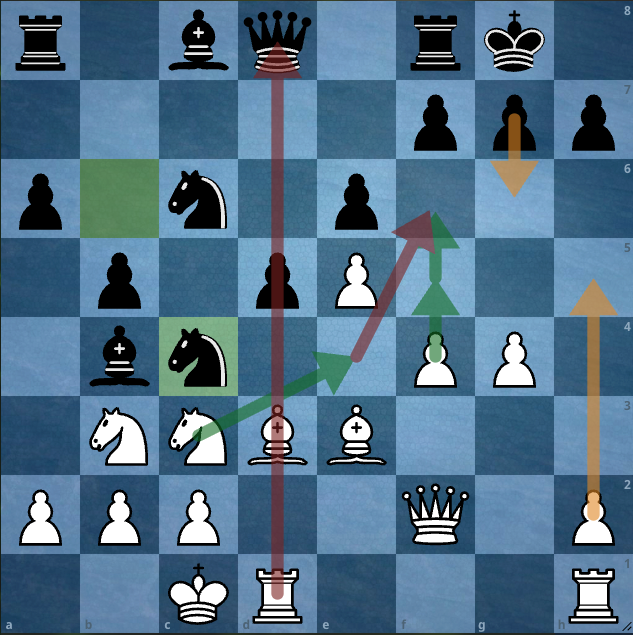
Black also has some typical ideas in its arsenal, but the delicacy of the position is choosing when to do what. Black’s main sacrifice idea is Knight takes b2, destabilizing the knight on c3. Black also wants to play b4 and bring the queen through a5, or, in some positions, play b4-a5-Ba5 to exchange White’s powerful bishop on d3.
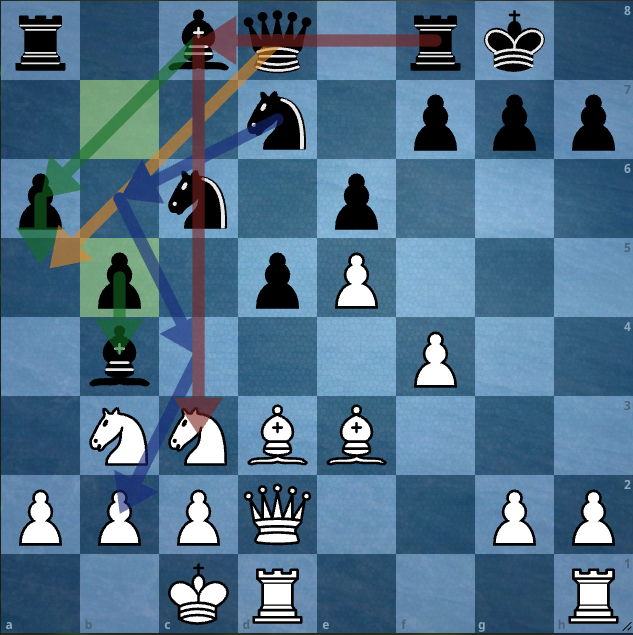
A few moves and trades later, I decide to bring my knight back to e7. This move was multi-purpose for me. On one hand, I send that knight towards the kingside for defensive purposes. For example, if White threatens mate with Qh5, I can now choose between playing g6 or Ng6. The knight also holds the f5 and d5 squares, since White is always on the lookout for f5 and N takes d5 ideas. On the other hand, I open lines for my rooks towards the White king.
Chess sequence: 15. Bc5 Bxc5 16. Qxc5 Bd7 17. g5 Rc8 18. Qf2 Ne7
Chess pieces by Cburnett, CC BY-SA 3.0
When I landed with my queen on a5, I felt I was starting to take over the initiative. The computer only gives Black a -0.5 advantage, but my opponent’s demeanour had shifted. He was trailing on the clock, with 11 minutes left at move 22, and finding the right way to defend the a2 pawn is not easy. Kb1 looks simple, but it’s scary. Had he played Kb1, my idea was to continue with Qb4, amping up the pressure. Instead, he went wrong with Qh4 and a3.
Chess sequence: 23. Qh4 Ng6 24. Bxg6 fxg6 25. a3 b4 26. Rg3 bxa3 27. bxa3
Chess pieces by Cburnett, CC BY-SA 3.0
When I saw a3, I knew I had to go for b4, which is exactly the kind of pawn break they warn you about when they tell you not to move the pawns in front of your king. After White recaptured on a3, there were a few ways for Black to bring it home, the most obvious being to capture the pawn with the knight. I didn’t choose the most accurate continuation according to Stockfish, but I think I chose the prettiest one, ‘cause look what happened:
Chess sequence: 27... Qb5 28. Rb3 Nxa3 29. Nd4 Qxb3
Chess pieces by Cburnett, CC BY-SA 3.0
I ended the game with a QUEEN SACRIFICE! The kind of finish that can turn a slightly shitty weekend into a pretty good one ☺️ I was also very pleased that I won with this line of the French Defense, because I have struggled with it in the past. This just means that analyzing those previous losses in this line paid off.
In terms of rating, I think it will stay unchanged for October. But it’s okay, the lack of a step backwards is a step forwards in this case ;)
If you liked the content of this article, you might enjoy following my “serious chess” sessions live on Twitch, or my game analysis videos on YouTube. You might also like my posts on Take Take Take 😍
Take Take Take is a new chess platform, founded by Magnus Carlsen and powered by lichess.org, that allows you to share snippets from your games and follow your friends’ and other creators’ posts! It also offers puzzles, generated commentary for each game review, and cool animations when you finally land a brilliant move 🤩 Use my referral link to join in on the fun!
Thank you so much for making it to the end of this article. I appreciate you ☺️